Reining in the BLM: It’s Time to End Taxpayer-Funded Cruelty
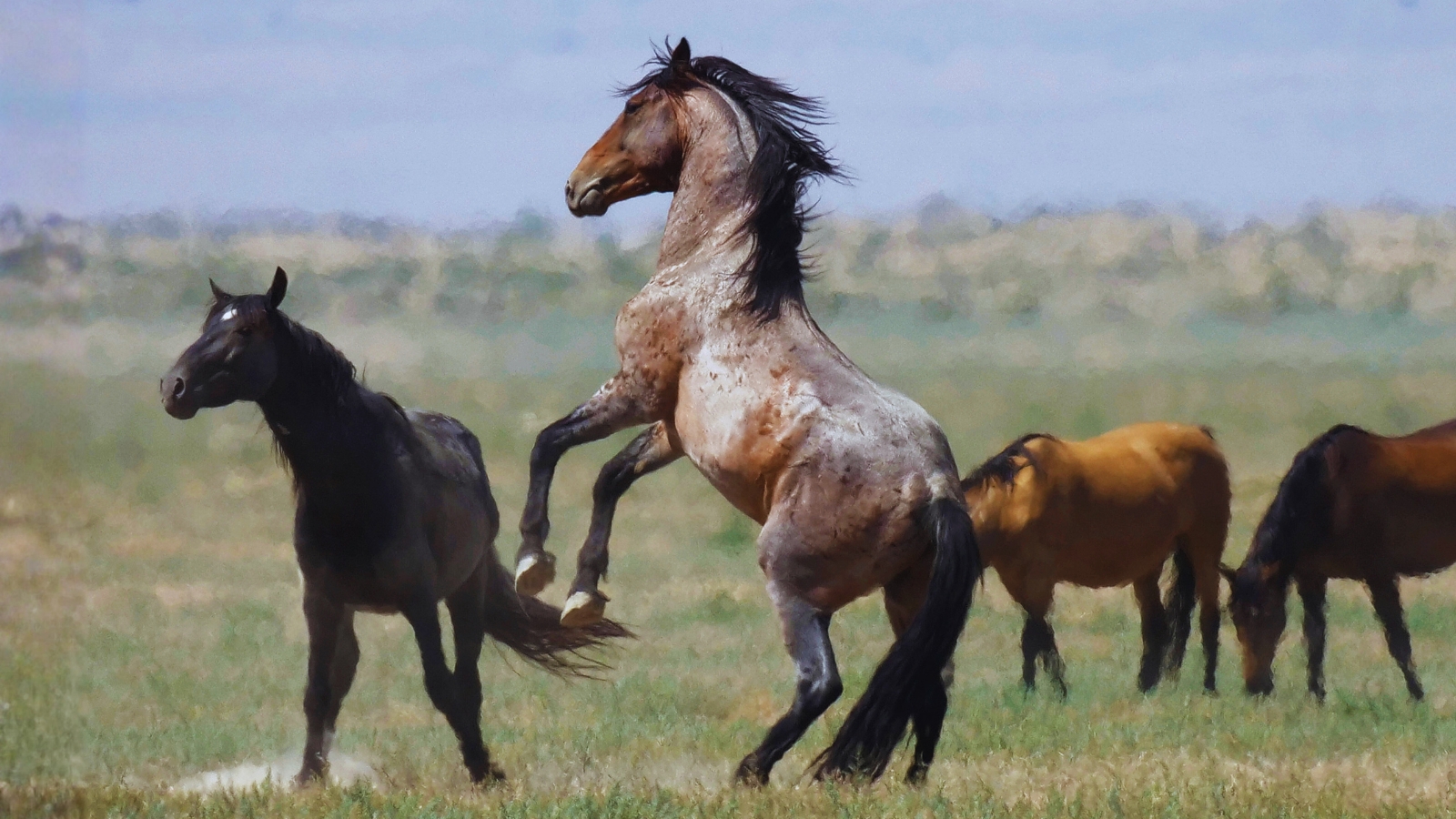
America’s wild mustangs are cherished symbols of freedom and resiliency, yet they have endured decades of taxpayer-funded cruelty from the Bureau of Land Management (BLM). Last month, the President signed appropriations legislation for Fiscal Year 2026 (FY2026) which effectively put the BLM on notice—the legislation includes not only key protections for wild horses and burros but also strategic language urging better fiscal responsibility from the agency. This is a moment to celebrate, but it’s not enough. To truly rein in the BLM, Congress must enact long-lasting reforms that embrace innovative, humane and cost-saving herd management solutions.
In crafting the FY2026 appropriations legislation, Congress deviated from the White House’s push to consider budget cuts and lethal herd management, upholding the longstanding ban on euthanizing healthy animals and selling them for slaughter, while ultimately increasing the Wild Horse and Burro Program’s budget by $2 million. New language in the Explanatory Statement stipulates this budget increase should coincide with a “commensurate increase” in fertility control investments, making it clear the BLM should prioritize humane, modern methods. While long overdue and insufficient to completely solve BLM’s mismanagement, these directives are a crucial step and certainly raise the bar for future funding negotiations.
When Congress passed the 1971 Wild Free-Roaming Horses and Burros Act, wild equines roamed on approximately 53.8 million acres of land. Today, competition for land use and government policies have cut their territory in half. The BLM continuously cites “overpopulation” as justification for removing wild horses and burros from public lands, claiming their numbers are triple what is sustainable for the land and herds themselves. Though wild horses and burros are outnumbered by cows at a ratio of more than 30-1 on BLM lands, they are frequently scapegoated for damage caused by the BLM’s own programs, like cattle grazing subsidies.
Hundreds of thousands of wild equines have been rounded up since the BLM began managing them. Approximately 64,000 still languish in government holding facilities, where their upkeep costs taxpayers over $100 million annually and consumes approximately two-thirds of the BLM’s Wild Horse and Burro Program budget.
The program’s budget has increased 600% since 2020 (270% in 2025 dollars) as the agency continues to prioritize inhumane removals and off-range holding, while spending less than 4% of its budget on highly successful fertility control. Since it costs roughly $48,000 to capture and warehouse a single horse over its lifetime, and a mere $1,500 to manage that same horse for its lifetime using humane fertility control, it’s hard to justify such lopsided spending.
Sadly, the BLM has also consistently demonstrated an inability to implement humane long-term solutions for the animals it has already captured. For instance, the poorly conceived Adoption Incentive Program backfired and resulted in thousands of wild equines entering the slaughter pipeline before it was shut down.
It’s clear Congress must step in to provide accountability and realign the BLM’s distorted priorities. Up against decades of ingrained mismanagement, legislators must push for significant reforms beyond appropriations cycles. Several bipartisan bills currently moving through the House offer a promising blueprint for 21st-century management of America’s wild equines:
- The LASSO Act: The Leveraging Aerial Systems for Stewardship Operations (LASSO) Act would launch a pilot program testing drone-assisted herd stewardship and population control strategies. Drone technology could revolutionize delivery of contraceptives, increasing scalability and reducing roundups.
- The Wild Horse and Burro Protection Act: Helicopter roundups have cost taxpayers more than $37 million over the past five years alone, while causing countless injuries and even death for wild equines—yet they remain a regular element of the BLM’s current policy. The Wild Horse and Burro Protection Act seeks to curtail this cruel and wasteful practice.
- The SAFE Act: Save America’s Forgotten Equines (SAFE) Act, which recently reached a majority of support in the House, would prohibit the commercial slaughter of horses, both domestic and wild, in the United States and permanently end their foreign export to slaughter. Though equine slaughter facilities in the U.S. have remained closed since 2007, tens of thousands of horses are shipped to Mexico and Canada for slaughter each year. The victims often include once-wild mustangs that have slipped through the cracks.
Wild equines embody the quintessential American value of freedom. Congress has rightly called them, “living symbols of the historic and pioneer spirit of the West,” that “enrich the lives of the American people.” Unsurprisingly, over 80% of Americans are concerned with their treatment. Congress must now devote serious attention to enduring reforms that will finally rein in the BLM’s cruelty and waste. It is past time to adopt more humane and fiscally responsible policies for managing America’s wild horses—anything less is an affront to our own ideals.
Free the People publishes opinion-based articles from contributing writers. The opinions and ideas expressed do not always reflect the opinions and ideas that Free the People endorses. We believe in free speech, and in providing a platform for open dialogue. Feel free to leave a comment.