The Fed’s Farce of Independence
Snitches get stitches, talkers get walkers, and prattling Powells get penally fouled.
Federal Reserve Chairman Jerome Powell is playing the first fiat-issuing Paul Revere: The Trump is coming! The Trump is coming! The Trump is coming! No cryptic hung lamps either. Poetic metaphor occupies no space in our chief greenshades’s cranium. He parked his dour mien before the world’s largest grievance-difusser: streaming internet video.
In an unprecedented address, made in the phlegmatic tone of a doctor delivering terminal news, Powell disclosed the Department of Justice had “served the Federal Reserve with grand jury subpoenas, threatening a criminal indictment.”
Hard-money enthusiasts shouldn’t let a thrill go too far up their legs. The DOJ isn’t a gathering of the Bimetal Society. Pam Bondi isn’t leafing The Theory of Money and Credit during her weekly pedicure at Wisconsin Nail & Waxing. The department’s horde of coal-suited attorneys isn’t poring over stacks of business-cycle textbooks.
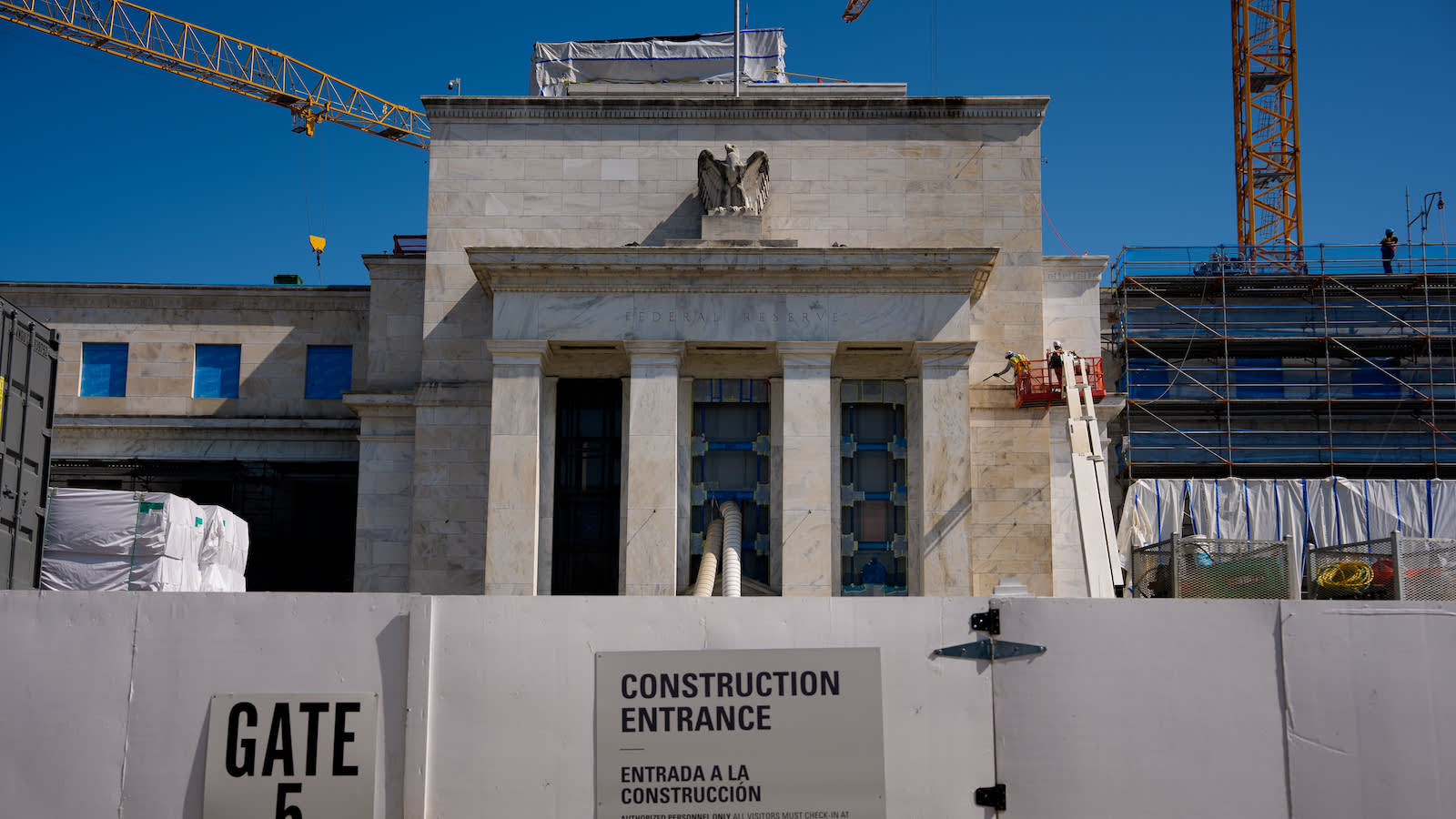
The legal scripts are pure pettiness pinned with a policy ransom. The ostensible impetus behind the summons: cost runups in the renovation of the Eccles Building, the collonaded Roman maison just off Constitution Avenue where the central bank’s pince-nezed honchos gather to… stare at balance sheets? Review PowerPoints? Crowdsource the New York Times crossword puzzle? Schedule parlays for divisional playoff weekend?
The Eccles Building’s purpose is inscrutably bureaucratic. The actual bond-wheeling-and-dealing occurs in the New York Branch of the Fed. Why even have a marmoreal colosseum lined with ethernet cables and 25-rainforest-acres worth of printer paper? Is there any justification outside the toddler reasoning of BIG BANK NEEDS BIG BUILDING?
The entire renovation hoopla was initially tagged at $1.9 billion, a real bargain to update a century-old building with all the modern progressive amenities like a “green-friendly” roof, wheelchair accessible elevator, unisex bathrooms, organic-stocked snackroom, plushy emotional-rest area, a grazing ground from any coincounter who identifies as a “furry.” It’s especially cost-effective if you have the de jure authority to mint your own clams!
As with any government projection, the overall cost when shovel-hits-soil has jumped. The final chit now rings in at $2.5 billion. Not a Bear Stearns bailout, but neither a song. An unscrupulous constructor with a likewise tenuous relation to fixed cost, Trump pounced on the discrepancy, calling a powwow with his Justice underlings, directing them to judiciously hound the flinty Fed head. The underlying motive is the holy grail of governance: authorial command of the money supply. Trump has long groused that interest rates are too high, which acts as a fastened lid on a bubbling economy. He’s openly voiced what other presidents normally relay in private, over candlelit Georgetown dinner tables, through encrypted phone channels, or by dispatching a scroungy intern, note tucked into the pocket of an oversized jacket, down a few blocks.
Powell avows as much: “The threat of criminal charges is a consequence of the Federal Reserve setting interest rates based on our best assessment of what will serve the public, rather than following the preferences of the President.”
Cue the hue and cry from Washington’s technocrat class. The nation’s newspapers balked at such a crude violation of unwritten norms. Editors at the Times, the Washington Post, and the Wall Street Journal cribbed each other’s obloquy. The normally Trump-sympathetic Free Press ran a reaming. A triad of moderate Republican senators coughed up tepid criticism. Democratic lawmakers diligently acted their patented cluster-b pageant. Even a few brunching Beltway libertarians spaced on Ron Paul and came out swinging in defense of the greenback-burning bank.
One word was common in all these scolds: independence. As in, the Federal Reserve is supposed to be independent. (The pitch is usually shrill, somewhere between stressed schoolmarm and a wine aunt off her Companize.) The central bank is what the Brits call a quango: a semi-autonomous public body shielded from democracy’s volatile tempers. Whereas voters fail to put long-term prosperity over short-term splurge, the Fed’s moola-managers are deputized to keep the dollar stable.
How’d the kings in the counting house fare? Since it was spawned in conspiracy on Jeckyll Island, the Federal Reserve has overseen a 97% decrease in the dollar’s purchasing power. A big ol’ F! A middle-school dropout would score better on the SATs than the Fed’s pinstriped moneyjobers at keeping American lettuce fresh.
Libertarian economist Murray Rothbard quipped that “it is curious how many self-proclaimed champions of ‘democracy,’ whether domestic or global, rush to defend the alleged ideal of the total independence of the Federal Reserve.” What this beloved remove has done for the Fed is keep its operations opaque, its methods murky, its overall function far from the venal eyes of voters.
Perhaps that’s for the best. The notion of a Walmart’s cashier having a hand on the dollar-print machine is hyperinflationary nightmare fuel. But President Trump’s greatest insult to the administrative state has always been, to quote Sohrab Ahmari and Matthew Schmitz, returning “fundamentally political questions” to “political contestation.”
A duly elected president sticking his nose in the darkened fortress of an unaccountable monopolized money multiplier is, to deploy a hackneyed phrase, what democracy looks like. Funny that marching lefties keen on democratic spirit forcefully oppose it.
Free the People publishes opinion-based articles from contributing writers. The opinions and ideas expressed do not always reflect the opinions and ideas that Free the People endorses. We believe in free speech, and in providing a platform for open dialogue. Feel free to leave a comment.