
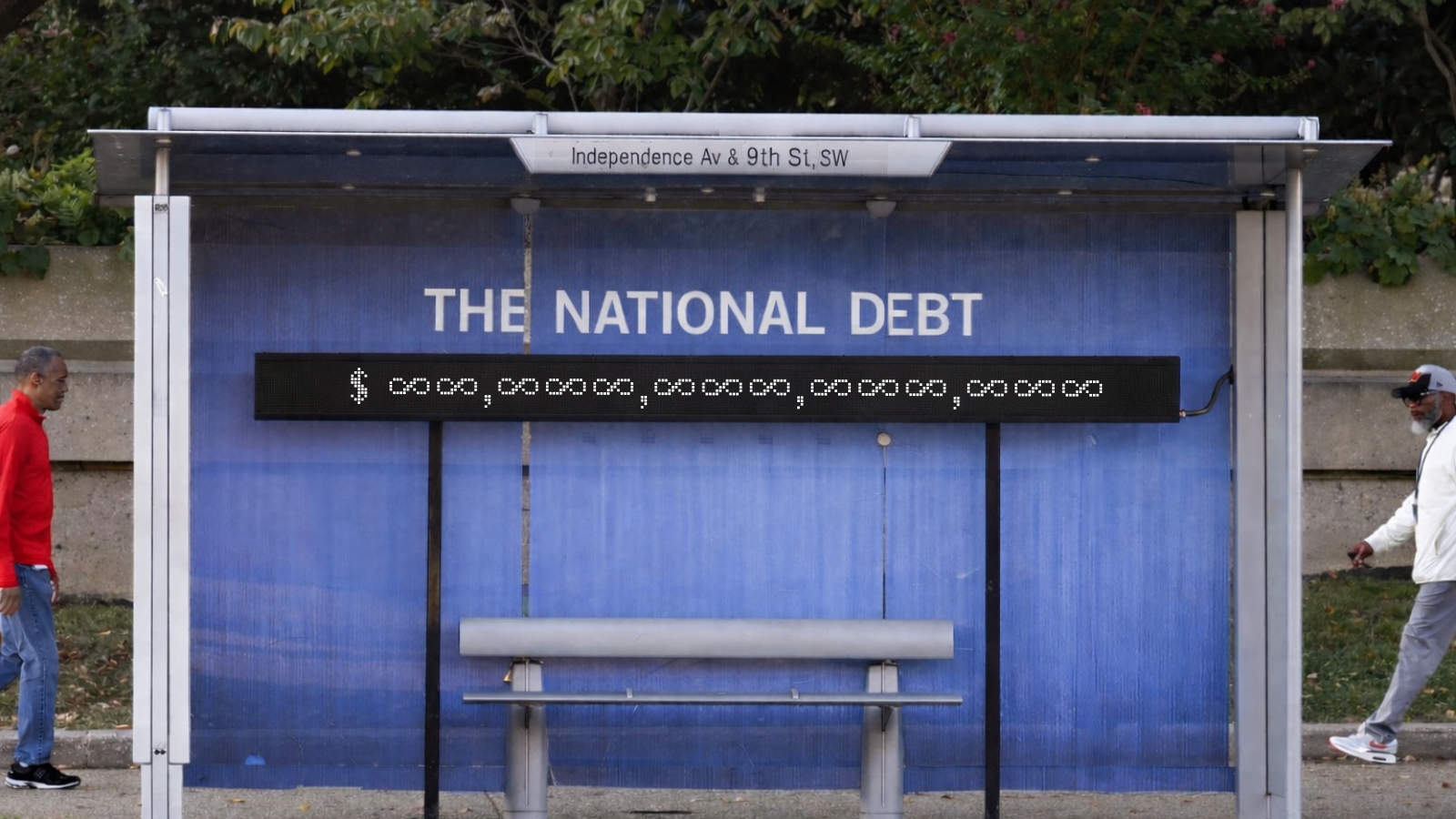
Degrees of Seriousness on the National Debt
We hit an ignominious milestone recently when the national debt crossed $39 trillion. Naturally, regular citizens have chimed in about what’s to blame, who’s to fault, what can be done, or does it even matter.
The discussion usually takes one or more of the following shapes.
If you’re new to the conversation, just dipping your toes in for the first time, you might think we can simply cut defense spending, or eliminate ‘waste, fraud, and abuse.’ Considering how many military bases we have around the world, that’s a legit angle.
When you factor in the Pentagon’s numerous failed audits and run-of-the-mill household items running into the thousands of dollars, you could kill two birds with one stone.
We’re just scratching the surface here though.
If you’re somewhat serious, in addition to those, you’re pointing out discretionary spending. Those are monies that Congress approves annually. The nearly trillion-dollar defense budget is part of it.
However, all told, such spending barely makes up a quarter of the overall budget, if that.
If you’re more serious, you’re including all the aforementioned items, plus the programs on autopilot. Those would be Social Security, Medicare and Medicaid. They are the three biggest items in the federal budget, eating up over half.
Interest on the debt, another expenditure on autopilot, recently overtook defense as the fourth largest item. Addressing all the rest will push that one down in the process.
Social Security’s financial health has been feeling the strain of an ever-growing number of beneficiaries and a declining birthrate. The worker-to-beneficiary ratio has been cut by more than half since it’s inception.
Regarding health insurance, its very structure is handicapped by its third-party payer nature. When consumers don’t know the actual price of the service they’re receiving, they’re less judicious in their spending.
One of the few less efficient enterprises than that is the government. It being the genesis of the Medis exacerbates the problem.
Regardless, you know you’ve encountered someone who is very serious about debt and deficits when they discuss attacking it at its root; the government’s ability to service it.
Investors (check your 401(k)) will continue to buy U.S. treasuries if they believe Uncle Sam will continue to have the ability to pay the interest. That ability rests on the taxing power it has over productive citizens.
So why not cut tax rates and reduce that ability?
History has shown that when they are reduced, and/or the code is simplified, the revenue flows to treasuries actually increases. This is partly due to taxpayers changing how they file, but it can also be attributed to the signal they’re getting from the government.
“We’ll take less from you, and you won’t have to spend as much time filing.”
Though some would convert that time into more leisure, that might very well entail more spending. What would juice economic growth even more is if some of that spending was via investing.
Alas, more growth creates more revenues, which gives buyers of U.S. debt even more confidence to continue lending to reliably profligate politicians. What then?
Go further. If we’re serious about reducing the national debt, the ability of the federal government to incur any more must be seriously curtailed.
In much the same way ‘waste, fraud, and abuse’ will never really go away until spending is reduced on a large scale, the spending itself will never really go away as long as there are tax revenues AND borrowing to finance it.
Whether or not this is the biggest problem facing us is up for discussion. Being a personal financial literacy teacher who walks the walk, I find such staggering debt levels to be outrageously appalling.
The upside is that the most organic, effective solution just so happens to coincide with a higher level of freedom, and subsequent prosperity for citizens.
Free the People publishes opinion-based articles from contributing writers. The opinions and ideas expressed do not always reflect the opinions and ideas that Free the People endorses. We believe in free speech, and in providing a platform for open dialogue. Feel free to leave a comment.




Olde Reb
The Federal Reserve’s fiat credit used to buy the Treasury security from the government historically was identified as redeemable in gold, and then redeemable in lawful money. The rumor is that this never happened. In 1933, by bogus legislation, the credit became identified as a legal tender. By this means, a debt of a private entity became a debt of the residents of the United States. Ref: 31 USC §462.
If §462 is found to have been legislated based on fraud, [such as FRNs could be redeemed in gold], it could be voided at inception and the National Debt would appear to be a debt of the Rothschild Federal Reserve. Rothschild historic bankruptcy of nations have ultimately seen seizure and distribution of all national assets by the bankers to favored claims of financiers and a destitute society.