
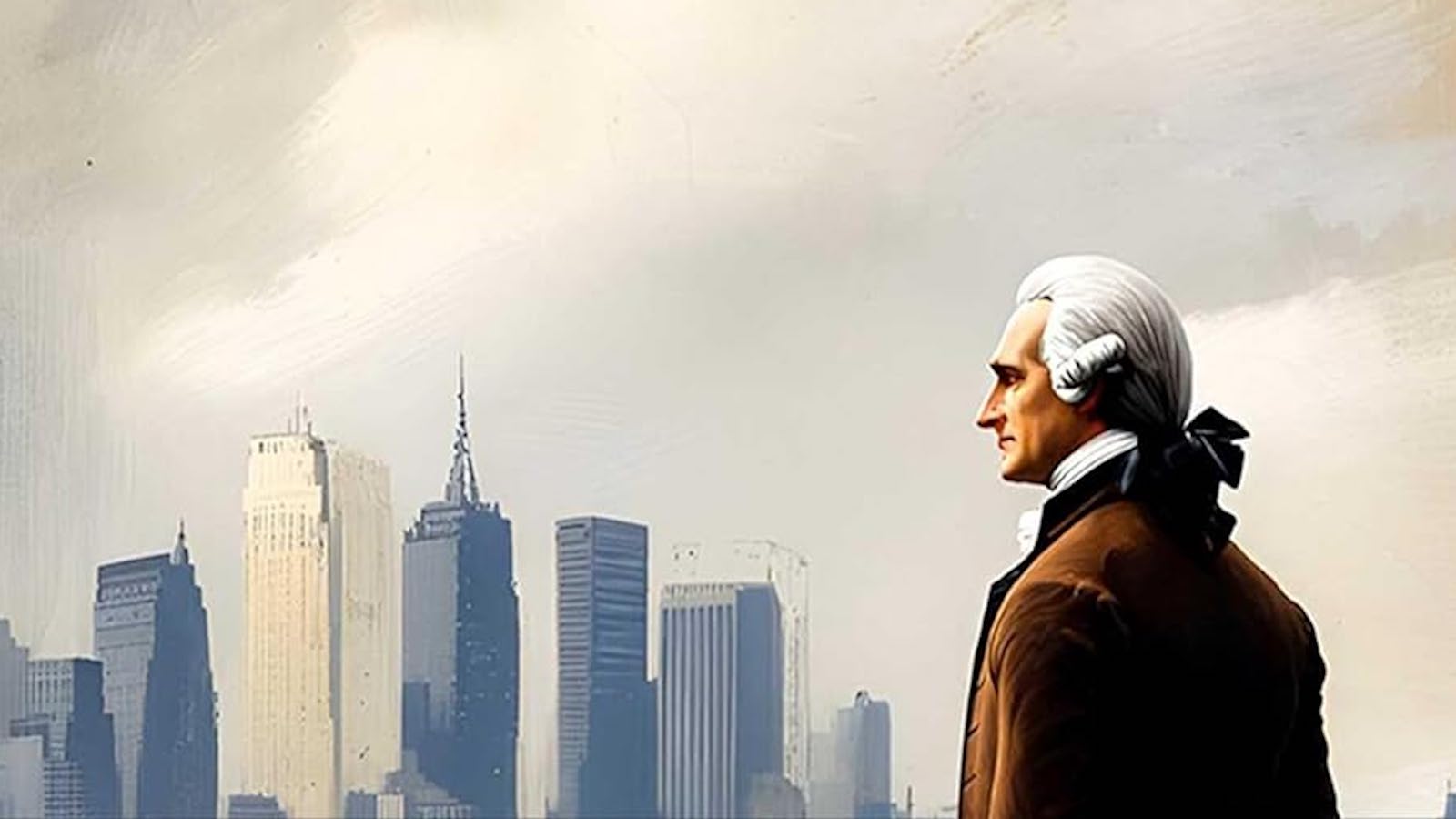
WWTPD: What Would Thomas Paine Do?
What would the Founding Fathers say if they were alive today? This is a question we often see posed as we lament the unchecked growth of government, exceeding both in size and scope the original vision for the United States of America as outlined in its founding documents. It’s also the question that author Johnny Teague attempts to answer in his latest book, Thomas Paine Returns with Common Sense.
In this novella-length thought experiment, Teague imagines Thomas Paine, one of the most influential political thinkers of the 18th century and a major contributor to our nation’s founding, returned from the grave to offer a series of ghostly pronouncements on the state of the country in the 21st century. The text alternates between excerpts from Paine’s most famous work, Common Sense, and applications of these passages to the political climate of today.
Why attempt to step into the shoes of a long-dead polemicist for contemporary political insight? There are several promising reasons. First, the past is replete with great thinkers from whose wisdom moderns we could undoubtedly benefit from if only we had access to it. Indeed, this constitutes much of the argument for reading and engaging with the classics in the first place: the ability to apply mankind’s earlier insights to new problems. Second, if we consider America as something more than a mere piece of land, as an idea that sprang from the minds and pens of its founders, an experiment in self-government and an opportunity to form a more perfect union of states and citizens, then it makes sense to return, on occasion, to the words of its designers and see whether we are living up to the example they set two and a half centuries ago.
As valuable as this exercise may be, attempting to put words in the mouths of the dead is a perilous business, fraught with pitfalls. But by hewing as closely to the original text, and juxtaposing his own writing directly with Paine’s, Teague deftly manages to avoid a great many of these (although I do think he is overly presumptuous in having his modern narrator repudiate Paine’s critique of Christianity, The Age of Reason). This allows the logic of Paine’s arguments to be applied to today’s society with a minimal amount of overt speculation.
The original Common Sense was largely an attack on the principles of monarchy, especially as applied by the English crown to its colonies in North America. While that situation has admittedly changed since 1776, it is striking how many of Paine’s critiques continue to apply to our supposedly democratic government. The increased power of the executive, excessive taxation, overregulation, the invasion of privacy, and the general disregard for the sovereignty of the individual all continue to trouble the American people in ways not dissimilar from the complaints of the 18th century colonists; complaints which ultimately led them to war a war for independence.
If Americans wish to preserve the kind of free and prosperous society their ancestors fought for, it is necessary first that they understand why the American project was begun in the first place, and what the founders hoped to achieve by breaking free from British rule. The next step is that the people be roused from complacency, having been lulled by years of comfort into accepting the numberless abuse of government authority as normal and tolerable. Revisiting the writings of Thomas Paine, as well as Teague’s updated analysis, is a valuable first step in that process.
Thomas Paine Returns with Common Sense is available from Histria Books, and more of Teague’s writing can be found at Free the People.
Free the People publishes opinion-based articles from contributing writers. The opinions and ideas expressed do not always reflect the opinions and ideas that Free the People endorses. We believe in free speech, and in providing a platform for open dialogue. Feel free to leave a comment.