

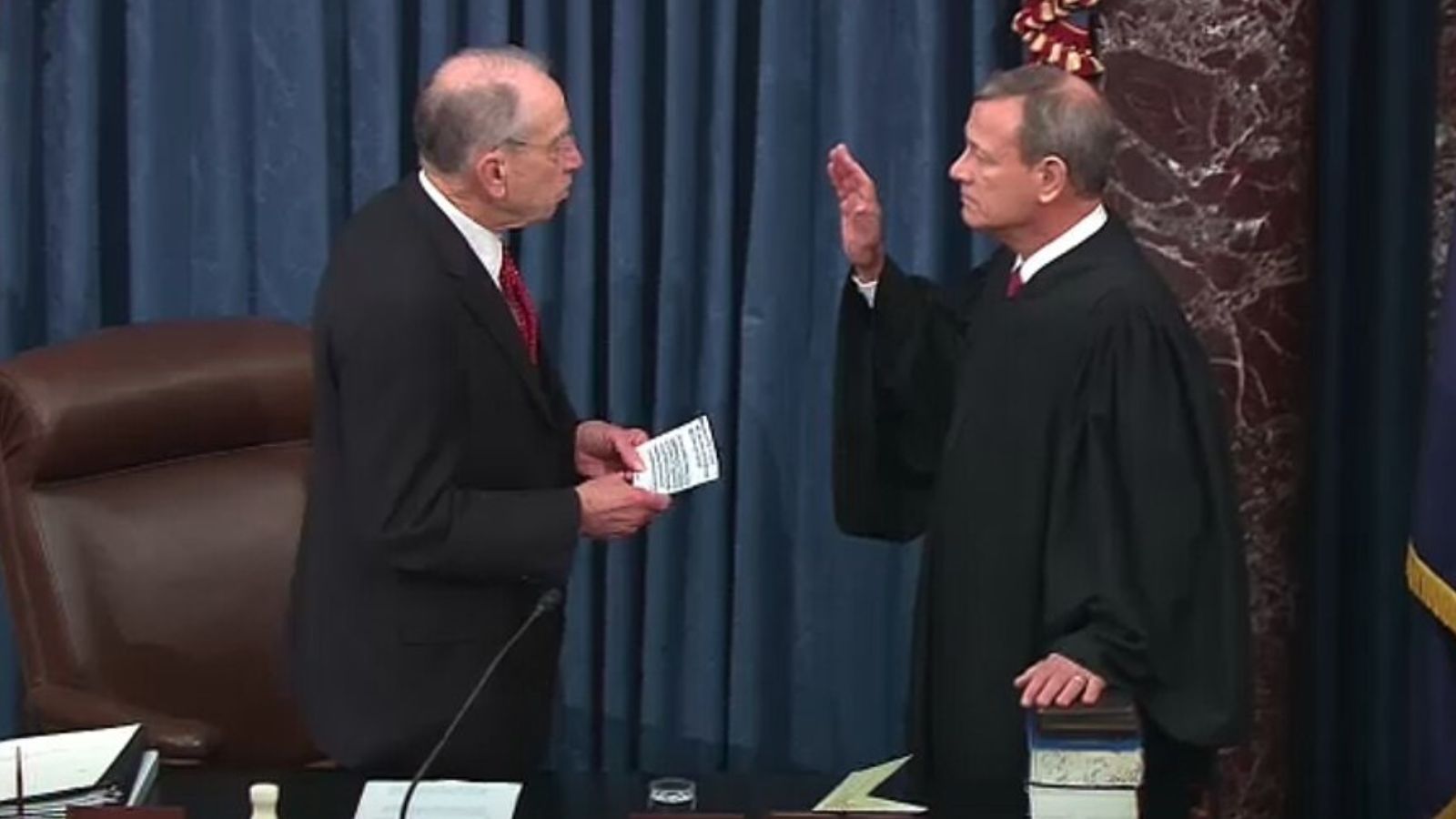
Beneath the Black Robe: Bias, Corruption, and the Case for Choosing Judges
The person who decides whether you lose your home, keep custody of your children, save your business, or spend years behind bars is supposed to be impartial: a judge. The one who calls them as he sees them. But is it true?
After all, judges are human. They can be influenced by politics, personal bias, financial interests, ambition, and in rare cases, even outright corruption or blackmail.
Corruption has been around since the start of civilization, but it is especially dangerous in courts, where justice is supposed to prevail. Many people imagine judicial corruption as a judge taking a suitcase full of cash. In reality, it is usually more subtle and harder to spot.
Kickbacks can hide in plain sight. Favors repaid through third parties. Consulting fees paid to a spouse. A son’s artwork purchased for a high price. Dirty money has many disguises.
Consider Chicago’s infamous Operation Greylord in the 1980s. An undercover FBI investigation exposed a culture of judicial bribery so pervasive that 17 judges were indicted, along with dozens of lawyers, court personnel, and public officials. Corruption had become part of the system.
Blackmail presents another danger. A hidden affair, undisclosed or gray area financial dealings, compromising photographs, or embarrassing videos can become powerful tools of influence over judges and lawyers alike.
Yet the greatest threat may be far more common: bias. It may arise from politics, ideology, personal relationships, political debt, financial interests, prejudice, or preconceived notions. Whatever its source, bias can be every bit as destructive to justice as outright bribery.
These are not fictional villains. They sit on thousands of courthouse benches across the country, exercising extraordinary power over the lives, liberty, property, businesses, and families of the people who appear before them.
Yet judicial bias, corruption, and incompetence usually remain hidden from public view. Most people do not realize these problems exist until they find themselves standing before a judge.
There is a surprisingly simple reform that could reduce the effects of bias, incompetence, and corruption: let litigants participate in choosing the judges who decide their cases.
There are many things in life beyond your control. You cannot choose your parents or where you were born. And, if you find yourself in court, you cannot choose the judges who decide your fate.
But suppose you could. Suppose the law allowed each side to help choose the people who would decide the case.
The Framers created three independent branches of government. The Legislature makes the laws. The Executive enforces them. The Judiciary resolves disputes. The first two were expected to be political. The third was expected to be impartial. It was an elegant design. Unfortunately, reality has not always lived up to the design.
Prospective judges spend years cultivating reputations, building political relationships, seeking endorsements, and earning the support of those who influence the selection process. Every method of judicial selection creates incentives, loyalties, and obligations. The question is not whether those influences exist, but how they affect the independence the public expects judges to possess.
Once appointed or elected, judges wield extraordinary power. A single ruling can bankrupt a family, imprison a defendant, reshape a business, or determine the custody of a child. Worse, obtaining that ruling often requires years of litigation at an enormous expense of time and money.
Modern litigation has become an endurance contest. Discovery battles, endless motions, continuances, and procedural maneuvering consume years and fortunes. Even winning on the merits may still leave the victor financially devastated.
One Arizona lawsuit illustrates the problem. A dispute between a landfill operator and a city over yard-waste contamination lasted nearly a decade. Legal fees exceeded $7 million. The prevailing party recovered only about $280,000. Victory became defeat.
The late Arizona Judge John Molloy once observed, “I’ve known very few judges who, after sitting on the bench for ten years, didn’t think they were sitting at the right hand of the Divine One.” Whether entirely fair or not, his remark reflects a concern shared by many litigants: power exercised without meaningful accountability can breed arrogance, inefficiency, and sometimes corruption. Lord Acton expressed the same concern more broadly: “Power tends to corrupt, and absolute power corrupts absolutely.”
Most judges are honest. Some are exceptional. But judicial corruption exists. Judicial bias exists. Judicial incompetence exists. Because judges exercise enormous authority, even a relatively small number of failures can erode public confidence in the entire system.
For many litigants, the judicial process resembles Edgar Allan Poe’s “The Pit and the Pendulum.” With every swing, the blade descends a little farther, consuming more time, more money, and more hope until the system itself becomes the adversary. What if we changed one thing?
Replace the single judge with a three-judge panel.
A three-judge court is less likely than a single judge one to be overcome by bias, incompetence, or corruption. Diversity of experience and opinion improves the likelihood of a fair result.
Multi-judge panels have long been used in appellate courts and legal systems around the world. The innovation here is extending that concept to the trial level while allowing litigants — not chance — to participate in selecting the judges who will decide their case.
Suppose each party selects one judge. Those two judges select a third to preside. Three independent minds are less likely than one to be overcome by bias, incompetence, or corruption. Better still, litigants gain confidence in a system they helped shape rather than one imposed upon them.
Judges who repeatedly demonstrate poor judgment, bias, or inefficiency would simply stop being selected.
The result would be fewer appeals, faster resolutions, lower costs, and greater confidence in the outcome. People are far more likely to accept a decision when they have participated in choosing the decision-makers.
Such a system need not replace today’s courts overnight. It could operate alongside the existing system, much as parties already choose mediation or arbitration.
The law already allows litigants to choose their lawyers, expert witnesses, arbitrators, mediators, and, in jury trials, to participate in selecting the jurors. Why should the most powerful person in the courtroom — the judge — be the only participant they cannot help choose?
A justice system worthy of public trust should be fair, competent, timely, and affordable. Too often, ours falls short.
Justice should never depend on the luck of the judicial draw.
It should depend on the quality of the decision.
Let litigants choose their judges.
Free the People publishes opinion-based articles from contributing writers. The opinions and ideas expressed do not always reflect the opinions and ideas that Free the People endorses. We believe in free speech, and in providing a platform for open dialogue. Feel free to leave a comment.