
Democracy Also Fails at the Local Level
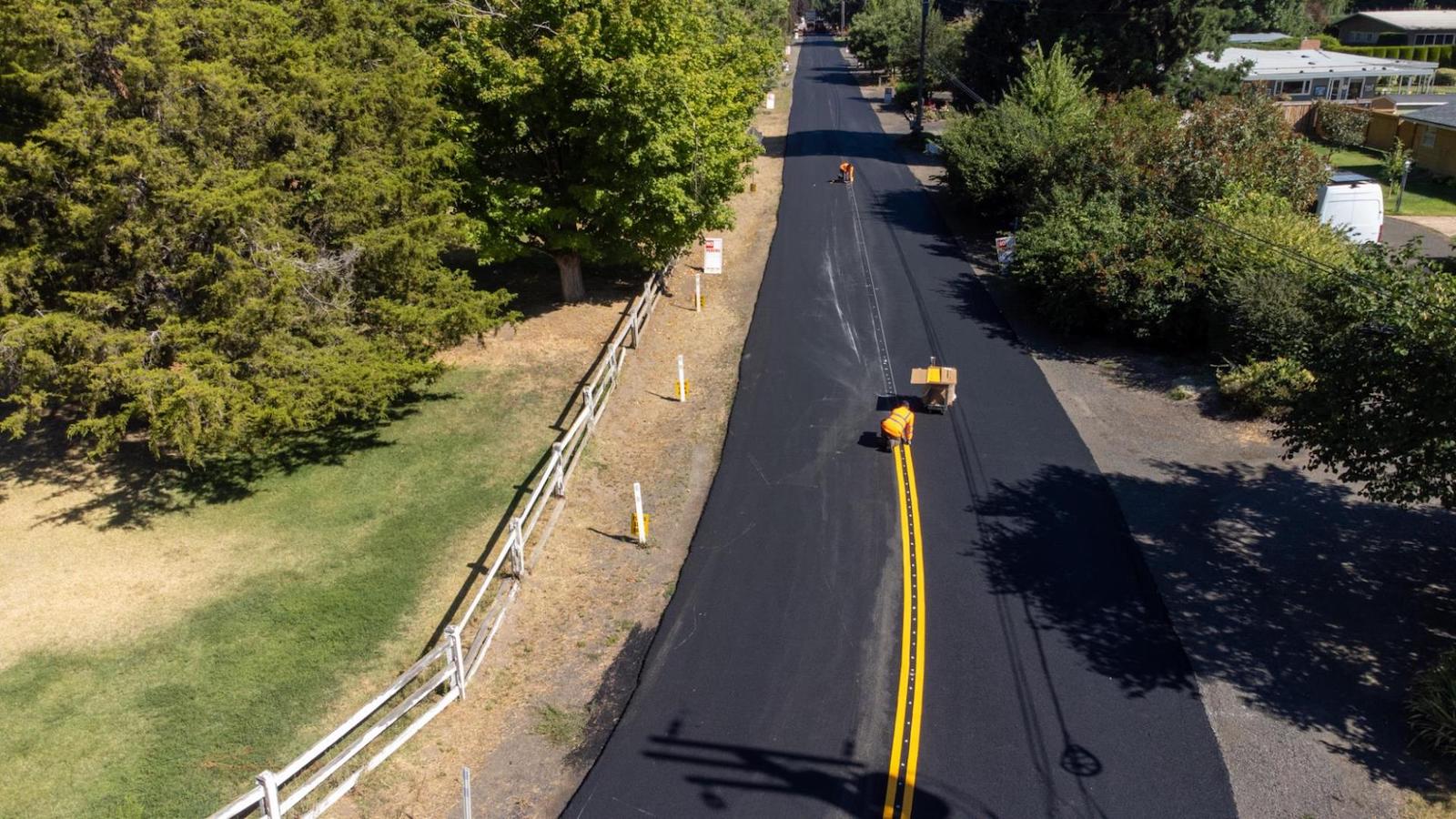
In Walla Walla, Washington, there once was a road that functioned properly and bothered no one. Much of Rose Street had two lanes in both directions, and with a speed limit of 35 miles per hour, drivers could pass those who didn’t seem eager to reach their destination. All was well, but a petulant minority wasn’t satisfied. This shrill set squealed that Rose would fully bloom if bike lanes were added to it; however, if they were to get their way, this would mean that Rose would lose a lane on both sides, and that is exactly what happened, despite no one voting for it. A minority demanded it; they demanded that everyone be forced to pay for what only they desired, and the feckless politicians in this small town were more than happy to oblige. It’s other people’s money, after all, and the cries to “do something” are impossible to ignore.
I trust the reader acknowledges that this is no outlier and that these antidemocratic antics happen everywhere, no matter the size of the town. Politicians pronounce the positives of their beloved democracy, but virtually no one else seems to share their enthusiasm. If “democracy” is “majority rules,” have most readers witnessed democracy functioning properly anywhere, especially at the local level? If a small but exceedingly obnoxious minority can dictate what the local government does, it’s reasonable to conclude that there’s no such thing as “democracy.” It’s nothing but a myth, nurtured by what’s taught in schools and exposed by what actually occurs. And it’s not just that the outcomes are often contrary to what was promised; when the results are dismal, at best, fixing what is now broken requires more of everyone’s money. Back to Rose Street’s remodeling, rather than fix the politically created problem, the problem is set to be duplicated.
Your author believes that drivers in Washington are among the worst in the country. “Left lane, fast lane” appears to have never been taught, and more than a peculiar few interpret the speed limit literally, meaning driving five miles per hour under the limit is preferable to five over. And now that Rose is one lane instead of two, it only takes one of these lamblike luddites to cause a mile-long caravan. But at least the bicyclists are thriving, right? Maybe elsewhere, but not on Rose. Seeing a bicyclist on Rose is an event rarer than witnessing a driver daring to exceed the speed limit. And Rose Street isn’t adorned with palm trees, as Walla Walla is no beach community. Distinct four seasons are a feature of Walla Walla, which means that for about three months of the year, no bicyclists dare to traverse the snow and ice.
One might conclude that with such an abject failure, the rotten Rose remodeling would be reversed, but it’s slated to be replicated on Poplar Street. In the real economy, markets—people—don’t intentionally harm themselves, but with the poison that is politics, trade-offs are ignored. Poplar’s perversion has yet to break ground, but citizens have already voiced their opposition. As with Rose, no one voted to remove one of Poplar’s lanes, and this is where the theory of democracy unravels. To those who criticize the plan for Poplar, the public servants reply that it’s public policy to press on. Washington’s politicians violently pat themselves on the back for their passionate support of democracy, but this is yet another example of democracy’s subversion. And again, only in the political economy do bad ideas get additional funding. No one in the political class seems to ask themselves, “After we do this, what will happen?”
As with Rose, Poplar’s remodeling will create more congestion, so will the general public be forced to pay for adding lanes to other streets? And with drivers avoiding both streets, which streets will suffer more wear and tear? Will bicyclists now feel less safe on roads that were previously less trafficked? And what if the backlash is so great that the political profits reaped from the minute minority end up transforming into a liability for the tax-fed? If policy overrides the will of the people, this is no democracy; it never was. This is civilized barbarism under the guise of democratic rituals. This is harming the people—with their own money and without their consent—under the guise of helping them. This is the government creating problems so that it can later offer ‘solutions,’ thereby justifying its parasitic existence.
But the government needn’t follow through with its Poplar plan; it can prove its critics wrong by cancelling the project, implicitly admitting that market forces trump the lie that the government exists to serve those who are forced to fund it.
Free the People publishes opinion-based articles from contributing writers. The opinions and ideas expressed do not always reflect the opinions and ideas that Free the People endorses. We believe in free speech, and in providing a platform for open dialogue. Feel free to leave a comment.