
In Defense of Horror
Fall is in the air; there’s a chill on the wind and you can catch the smell of wood smoke drifting its way from the occasional chimney, revived after long disuse. The leaves are changing from the greens of summer to the more dramatic shades of yellow, orange, and crimson we associate with apple picking, pumpkin carving, and corn mazes. And perhaps most importantly, a darkness is descending over the land. I’m not just talking about the shorter days resulting from the Earth’s changing axial tilt (and the mercifully soon-to-be-ended artificiality of Daylight Savings Time). I’m talking about that spooky time of year when ghosts and goblins emerge from beyond the veil to haunt decaying churchyards and lonely crossroads, when witches work their forbidden sorceries and nameless things lurk hungry in the shadows. It’s Halloween! when Americans rejoice in celebrating the dark underbelly of the human psyche, exploring fear and the unknown with the enthusiasm of children out trick-or-treating.
If the opening paragraph didn’t make it clear, this happens to be my favorite time of year. But not everybody is happy about the season and its moral implications. BlazeTV host Allie Beth Stuckey has ignited a controversy with a (since deleted) tweet in which she admonishes her fellow Christians not to watch horror movies or other scary content.
“I don’t think you should be reading books that make you scared. I don’t think that you should be listening to true crime podcasts that make you scared. I don’t think you should be listening or watching movies that make you scared… How many times do we read throughout Scripture from Jesus and in the Old Testament: ‘Do not fear, do not fear.’ And yet we purposely consume content that is meant to make us scared.”
Now, I should note at this point that I am not a Christian, so I really have no dog in this fight, nor is it my place to tell Christians how to practice their religion, but as an avid appreciator of horror media, I feel I need to stand up in defense of my genre of choice.
To begin with, Stuckey’s reading of the Bible here is very strange. When Jesus or Yahweh says, “be not afraid”, I don’t think he is instructing his followers never to do anything that makes them feel scared, to live a life of easy, unchallenging comfort with the goal of avoiding a particular emotion at all costs. Indeed, that seems to me to be the opposite of the intended message.
What the Bible is actually talking about is courage, and courage is not about never feeling fear, but rather about not letting that fear dominate your life or dictate your actions. In “The Wizard of Oz”, the Cowardly Lion discovers that he is not as cowardly as he imagines, because although he does experience a keen sense of fear, he nevertheless takes bold and decisive action to help his friends when they are in danger. His courage consists in overcoming his fear, not being oblivious to it. A Christian anxious to avoid fear would never be able to emulate the lives of the apostles, who frequently put themselves in great danger, to the point of being martyred, in order to spread their faith and preach what they saw as the truth. The Bible is also full of stories which could themselves be described as horror literature, such as descriptions of Hell, confrontations with Satan, biblically accurate angels, and the entire book of Revelation.
But apart from any biblical interpretations, I think horror movies deserve a defense on their own merits, which are many. The tradition of horror is one that goes back a long time, and out of all fiction genres it is perhaps the one most concerned with imparting moral lessons to the audience. If we look at many of the most classic and enduring horror stories, they tend to take the form of cautionary tales highlighting the dangers of certain bad behaviors. In the very old legend of Faust, immortalized as a horror classic by Goethe and Marlowe among others, an arrogant young man sells his soul to the devil in exchange for worldly knowledge and magical powers, with disastrous results. The lesson is one opposing hubris and the perversion of the natural order of things. These same themes can be found in “Frankenstein”, in which a proud doctor plays God by reanimating a corpse, which he then neglects and abandons. Some have read “Frankenstein”, written by the teenaged Mary Shelley, as a metaphor for the importance of the nurturing mother in the creation of children: when only Daddy Frankenstein is present, his offspring become monstrous. Could there be a more ringing endorsement for family values than that?
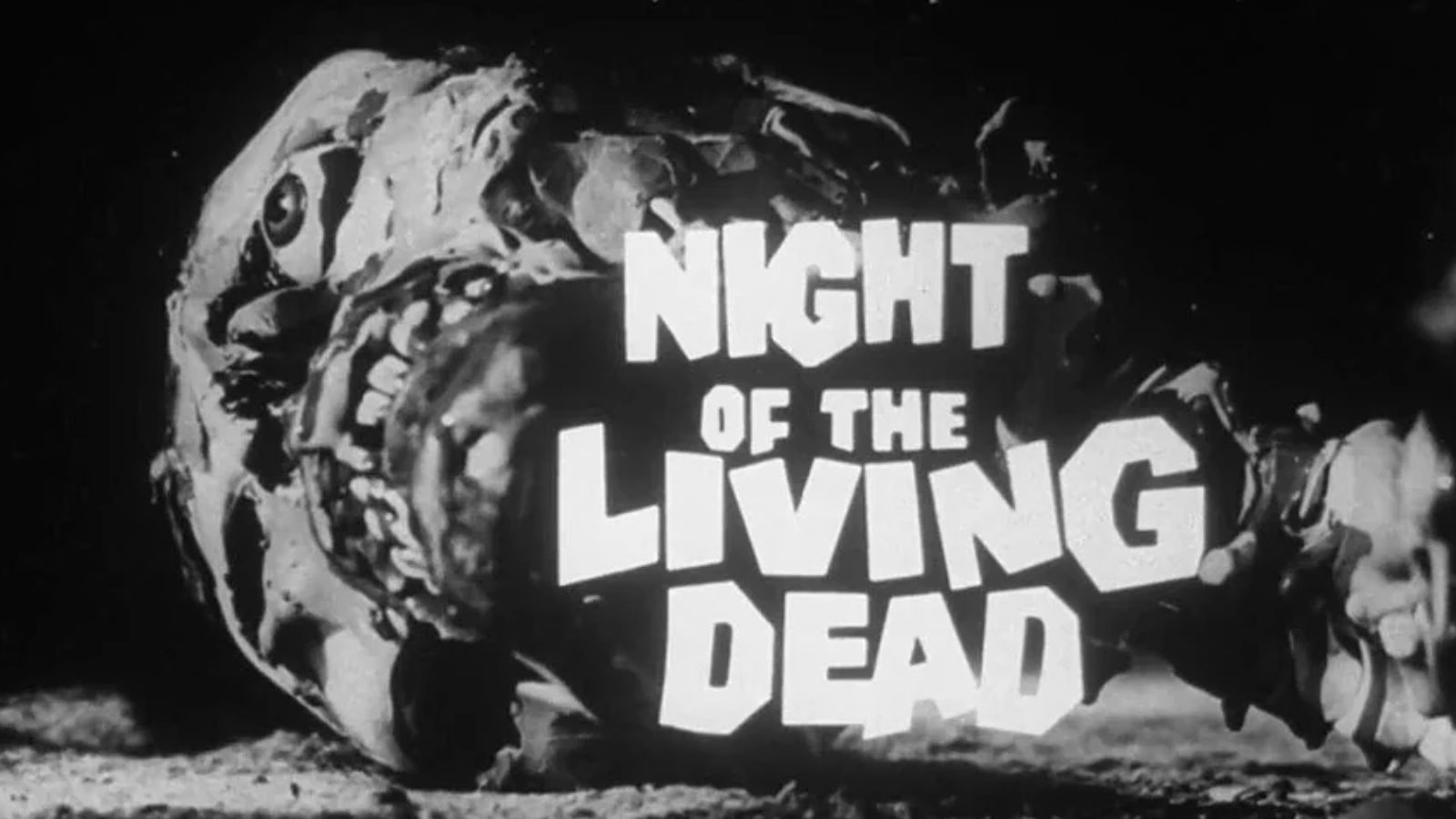
In Oscar Wilde’s “The Picture of Dorian Gray”, a vain young man wishes that his portrait would age and deteriorate in place of his body. When he gets his wish, he quickly descends into a life of vice, hedonism, and cruelty, having been immunized from the physical consequences of his actions. “The Mummy” warns against tampering with and disrespecting the ancient dead. Zombie films, beginning with “Night of the Living Dead”, can be viewed as a response to the collectivist ideology of communism, representing evil as a shambling mass of undifferentiated drones, whose only motive is to rob their victims of their braaaaaiiinns!
Modern slasher films continued this tendency towards moralizing, rewarding purity and virtue in the persona of the final girl, while killing off the promiscuous, the ignorant, the arrogant, or the reckless. The film “Scream” goes so far as to explicitly point out the genre’s conventions to the audience. Films like “The Exorcist” and “The Omen” even elevate Catholic priests to the status of heroes, while warning against associating with the powers of darkness. It’s hard to see how anyone could interpret these films as antithetical to Christianity in any way.
On a more practical level, horror films can serve as a sort of training ground for overcoming fear and learning how to deal with terrifying situations when and if they occur in real life. Just as the fencer practices with pads and blunt swords in preparation for a real sword fight, horror media allows viewers a safe space to imagine how they might behave if their lives were really in danger. Who among us has not drafted mental plans for surviving an apocalyptic wasteland or fighting off a deranged serial killer based on the scenarios we’ve watched play out on our screens? By simulating these events safely, we become familiar with the rush of adrenaline, the elevated heart rate, and the sense of paralysis that accompanies danger, so that when these physical symptoms actually occur they will not come as a surprise.
In a famous and often misquoted line, noted Catholic writer G.K. Chesterton makes the case for the instructive power of scary stories thus:
Fairy tales do not give the child his first idea of bogey. What fairy tales give the child is his first clear idea of the possible defeat of bogey. The baby has known the dragon intimately ever since he had an imagination. What the fairy tale provides for him is a St. George to kill the dragon.
It is certainly true that there exist certain films whose only purpose is to shock, to disgust, and to be as transgressive and extreme as possible. Perhaps it is the case that nothing can be learned from such films, and if so, Allie Beth Stuckey may have the ghost of a point. But the vast bulk of horror media has more to offer than mere fear or titillation. The task of a strong and virtuous adult is not to hide under the bed and avoid anything that makes him uncomfortable. It’s to stand and face the monsters that populate our world, whether they reside in movie theaters, on city streets, in the halls of Congress, or in the dark heart of the woods.
Free the People publishes opinion-based articles from contributing writers. The opinions and ideas expressed do not always reflect the opinions and ideas that Free the People endorses. We believe in free speech, and in providing a platform for open dialogue. Feel free to leave a comment.