
Could Medication Be Diminishing Genius?
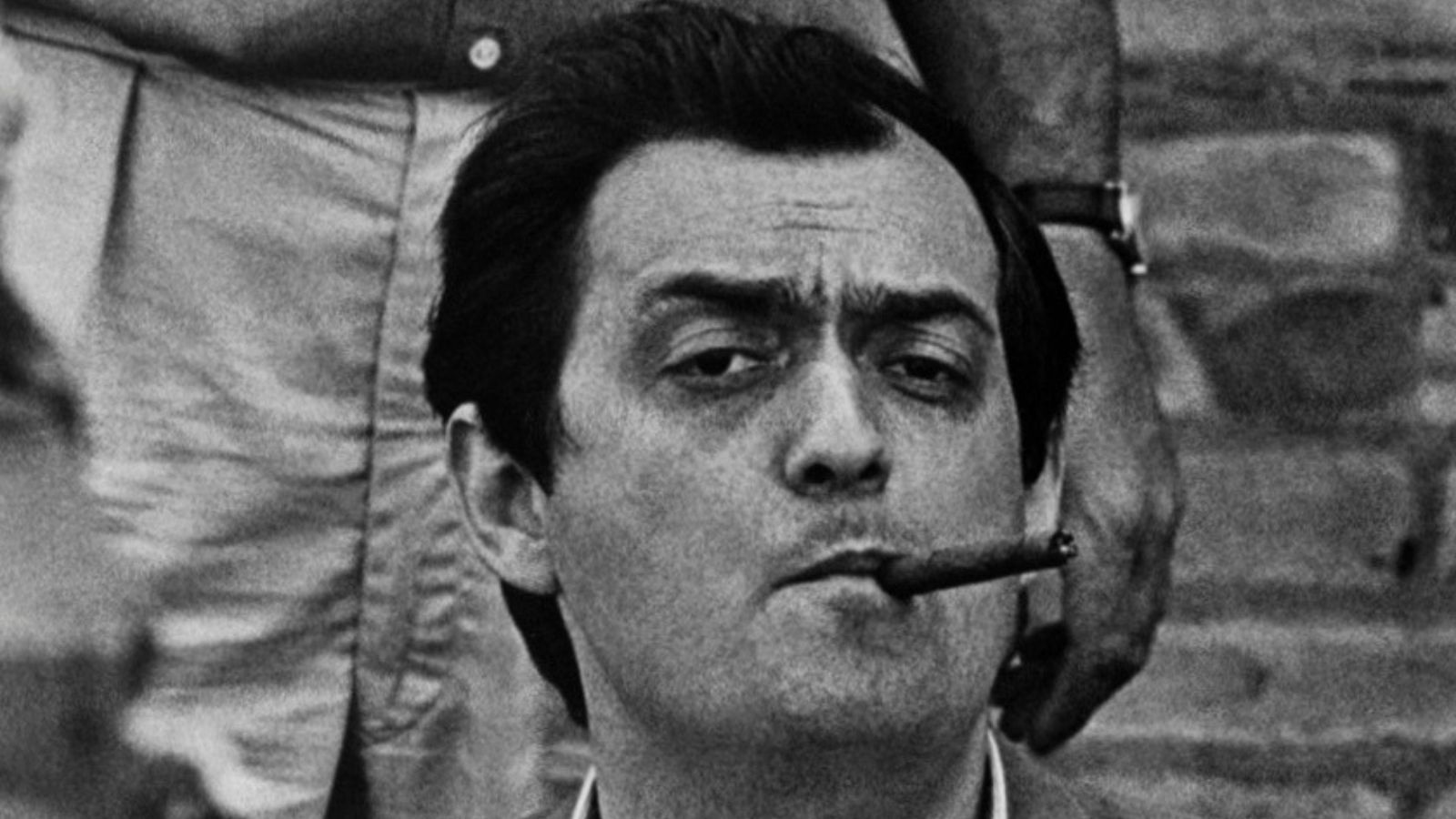
I recently acquired the mammoth new boxset from the Criterion Collection featuring the complete films of Stanley Kubrick, my favorite director since I first saw The Shining at an irresponsibly young age. In addition to new restorations of each film, the set includes a wealth of bonus features, commentaries, and documentaries offering insight into the life and work of the legendary director. Even among non-cinephiles, Kubrick’s reputation is that of an eccentric genius, known for his exacting perfectionism, his reclusive lifestyle, and his tendency to demand dozens of takes from his actors in order to extract a certain kind of performance.
One documentary included in the set, entitled Kubrick’s Boxes, explores the thousands of cardboard boxes left behind in the director’s house after his death. Meticulously organized, these boxes contain everything from exhaustive photo research into film locations and costumes, audition tapes, memos to Kubrick’s assistants, reviews and advertisements for the films, and an archive of fan letters sorted by location and whether the feedback was positive or negative. Kubrick also kept a file of “crank” letters that he wanted the police to have access to in case he was ever assassinated.
Interviews with former assistants reveal the kinds of bizarre requests they were subject to, such as contacting the weather service to ask about barometric conditions in the middle of the night or photographing several miles of street from a ladder in order to save Kubrick from having to leave his house to go look for himself. He would also measure newspaper ads for his films to the millimeter to ensure that he was not getting less space than he paid for. Although his colleagues and family all speak of him with affection and admiration, he does not sound like an easy man to work with.
I want to be clear that I do not share the view that many have come to adopt of Kubrick as an abusive filmmaker—he cared deeply about his work and expected others to be as serious as he was, an expectation without which his films would not be so striking and memorable. But the more I learn about him, the more convinced I am that, had he been born in today’s climate, he would have undoubtedly been diagnosed with some kind of behavioral disorder and medicated for it.
It is a perilous and foolhardy practice to attempt to posthumously diagnose figures from the past (though it’s hard not to think of terms like “obsessive compulsive” when learning about Kubrick’s habits). Nevertheless, I cannot imagine the modern educational or psychiatric professions being content to leave such a man alone. Those tendencies which in the past would have been called “eccentricities” are now regarded as “disorders”, implying something that needs to be corrected through therapy and medication. Had Kubrick been given Ritalin or Adderall as a child, who knows how his work, his relationships, and his habits would have been affected? Perhaps he would have been happier, but at the cost of an artistic legacy that has rarely been equaled in the medium of film.
The same can be said for any number of other obsessive geniuses, from scientists like Newton and Tesla, to artists like Van Gogh and Poe, and philosophers like Nietzsche, who spent the last years of his life in the grip of a complete mental breakdown. In an era of modern diagnostics and medicine, would any of these creators have gone as far and done as much? It seems doubtful.
This is not to say that happiness is not preferable to depression or that sanity isn’t preferable to madness. Rather, the mistake that modern psychiatry makes is to assume that the various aspects of human personality can be separated from one another and tinkered with, á la carte so to speak. The individual exists as a complete package, full of complexities and hidden depths, and it is generally not possible to alter one aspect of the personality without affecting others. In sanding off the rough edges of any given human being, we risk sacrificing the uniqueness of the individual for bland uniformity.
Despite the ubiquity of slogans like “diversity is our strength”, the project of the 21st century has largely been to rein in outliers, nonconformists, and weirdos so that we all think and behave in similar ways. This begins in schools, where students are expected to sit quietly while dutifully providing the answers to standardized tests. Those who fail to meet this expectation, either because they learn too slowly, or too quickly, or act out because they are bored, or would simply rather be doing something else, are treated as defective and drugged into docility. Currently, more than 1 in 4 American children has been diagnosed with some form of mental, behavioral, or developmental disorder.
Things are not much improved for adults, who are expected to tick certain boxes while endlessly repeating the officially approved talking points from the powers that be. Independent thought is treated like a kind of pathology, and we are told that the presence of any negative emotion, whether it be anxiety, anger, depression, or grief, is grounds for professional intervention from a therapist or psychiatrist, the latter of whom will almost invariably prescribe some kind of “mood stabilizing” pill. Currently, about 1 in 6 Americans is taking some form of SSRI or antidepressant, while about 1 in 10 is in therapy.
The glory of the human race is in our individuality, in our differences. If we were all the same, there would be nothing to celebrate about our species, nor would we have any achievements to speak of. It has always been the outliers, the abnormal, the ones with a touch of madness in them, who turn the wheels of progress and who are the engine of civilization.
A little delusion is necessary to overcome the feelings of self-doubt that haunt us all; a little mania is required to summon the energy to work deep into the night on a passion project; a little obsession prevents the genius from getting distracted by the mundane concerns of everyday life; and a little depression allows the artist to plumb the depths of human emotion in ways others can’t. The normal, well-adjusted man may have a pleasant and peaceful life, but he is not likely to be reckless enough to smash through the barriers erected by his predecessors.
I fear that the future will suffer a poverty of creative genius as society increasingly seeks to enforce conformity in the guise of mental health. The alleviation of mental anguish and suffering is certainly a noble goal, and it is sad to have to watch anyone struggling with emotional difficulties. But this goal must be balanced with the recognition that without those little mental quirks, the obsessions, the fixations, the mood swings, and the capacity for sorrow, we lose much of what makes us human, as well as much of what makes us great. We must allow space for the Stanley Kubricks of the world to obsess over their endless boxes of minutia. Otherwise, we not only sacrifice art, but something of the very soul of our civilization.
Free the People publishes opinion-based articles from contributing writers. The opinions and ideas expressed do not always reflect the opinions and ideas that Free the People endorses. We believe in free speech, and in providing a platform for open dialogue. Feel free to leave a comment.