Carrying A Firearm Should Not be a Death Sentence
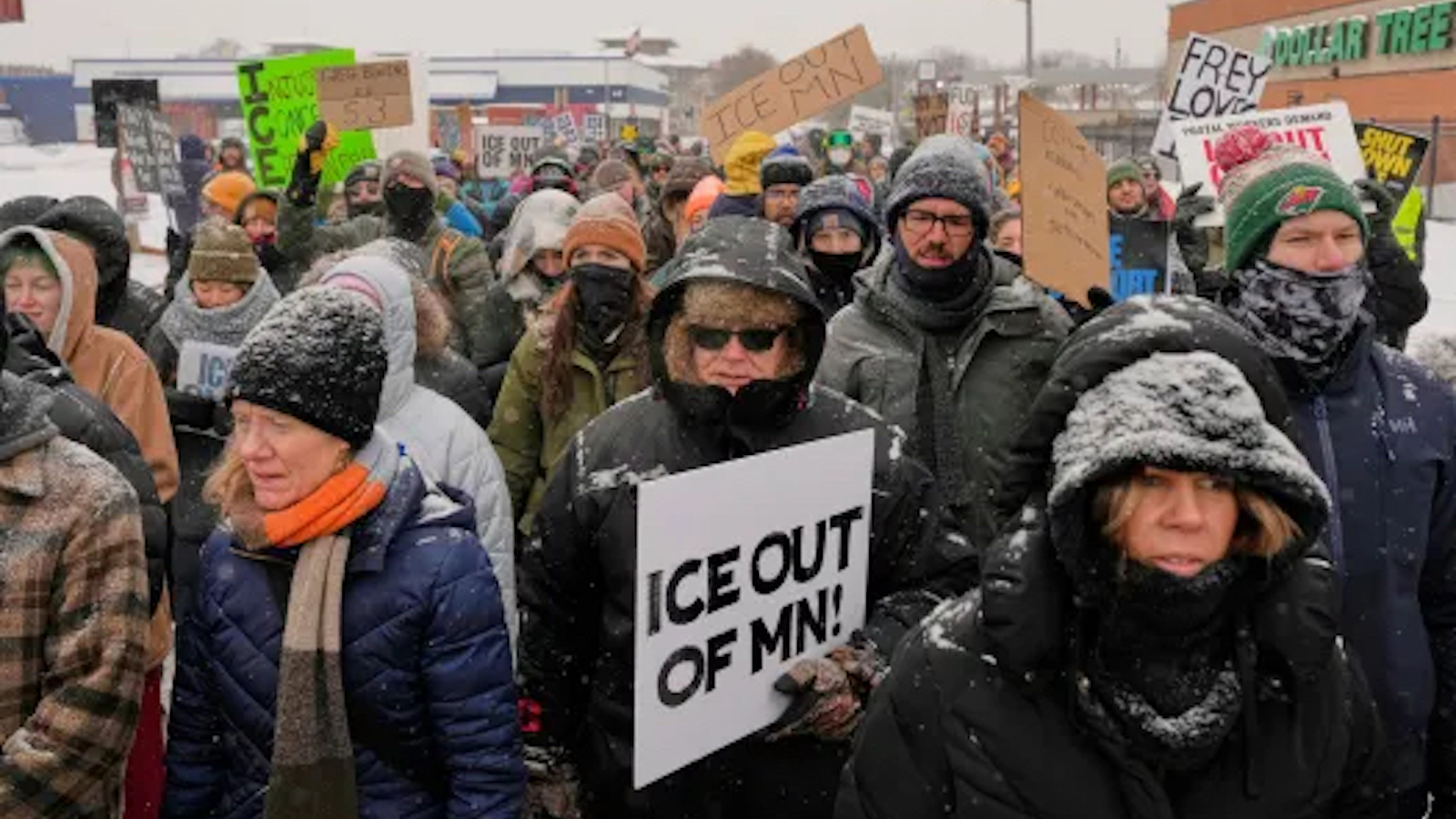
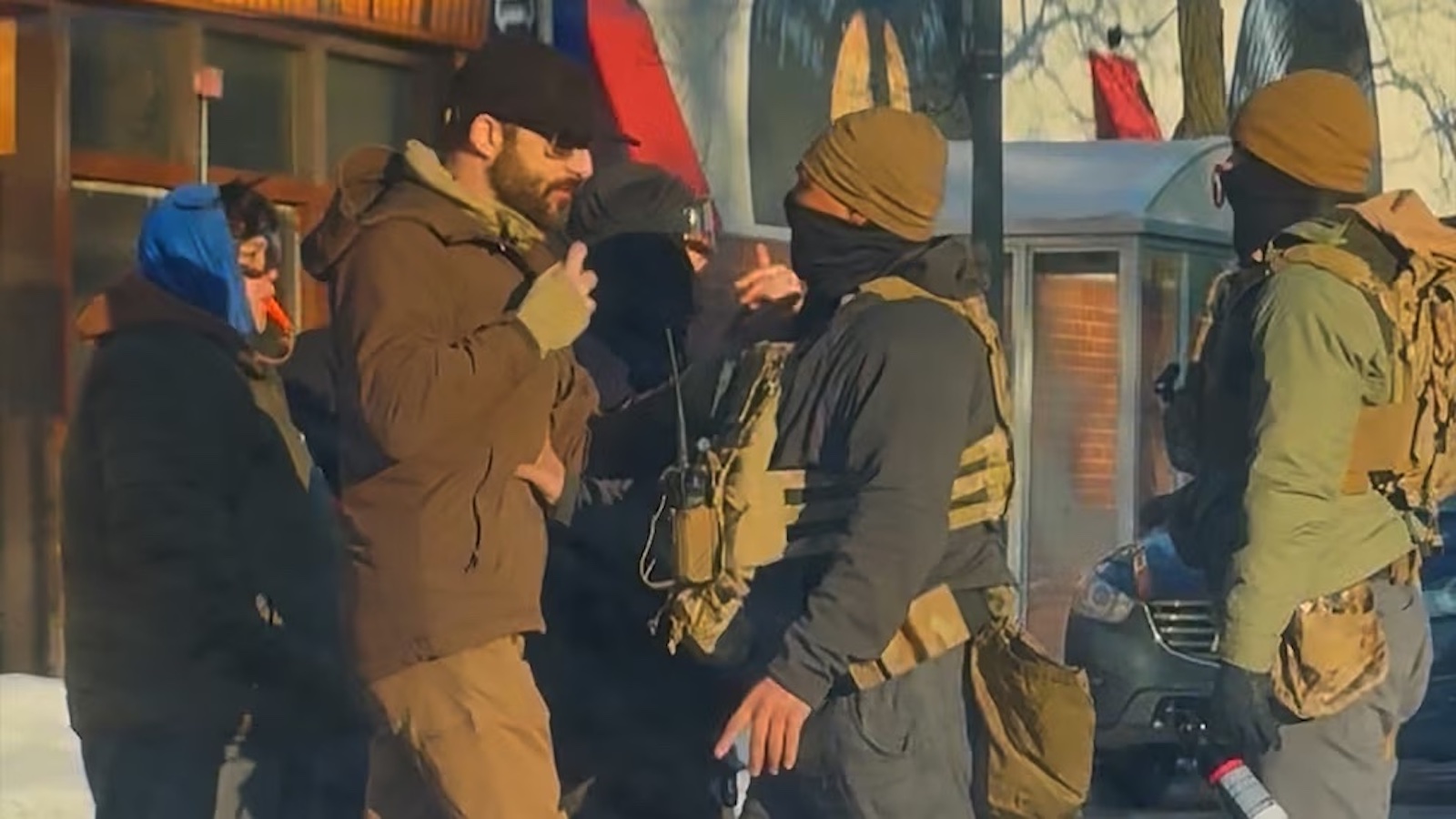
In the aftermath of the shooting of Alex Pretti, a dangerous assertion has begun to shape the public response: That the mere act of carrying a firearm at a protest or while filming police transforms a citizen into a violent threat.
That assumption was made explicitly by DHS Secretary Kristi Noem during a press conference when she stated, “I don’t know of any peaceful protester that shows up with a gun and ammunition rather than a sign. This is a violent riot when you have someone showing up with weapons.”
That statement is, first, blatantly false, and it should also alarm every American.
One of the core issues raised by the shooting in Minneapolis is not partisan, but a foundational right to carry a firearm. In a truly free society, lawful possession of a firearm cannot be treated as probable cause for lethal force. A right that lowers the threshold for being killed by the state is not a right at all. Just because someone is carrying a firearm does not mean they are a threat.
Carrying a firearm, especially during protests, should not be a death sentence.
Armed Protest is Not a Contradiction
Secretary Noem’s statement collapses under even minimal scrutiny.
In January 2020, more than 22,000 people gathered at the Virginia state capital in Richmond for the Virginia Citizens Defense League’s annual Lobby Day to protest anti-second amendment legislation and meet with members of Virginia’s congress to try and sway them against it. Many of those attendees openly carried firearms. Rifles, including AR-15s, and handguns were common. One individual even carried a legally owned .50-caliber rifle, something that anti-second amendment individuals deemed as proof that violence was going to occur.
No violence ever occurred.
Despite the supposed weeks of warnings of violence touted by Democrats in charge, the rally concluded peacefully. There was no gunfire, no rioting, no injuries. Protesters even cleaned up after themselves and left the place in better condition than when they got there. The presence of firearms did not create any chaos.
West Virginia’s Citizens Defense League has followed in the same pattern. Armed citizens have assembled peacefully and lawfully, without violence. These demonstrations directly refute the claim that firearms and peaceful protest are mutually exclusive.
A gun is nothing more than an object. Violent action is the conduct of the individual. Confusing the two is inaccurate and dangerous.
The Ideological Inversion on Display
What makes the current situation in Minneapolis even more weird is the political inversion and hypocrisy it has shown by both sides.
For decades, the Republicans have styled themselves as the defenders of the Second Amendment while Democrats outright despise it. In response to Minneapolis, however, many self-described pro-2A Republicans are now arguing that the visible exercise of carrying a firearm near ICE and filming them nullifies that right and the right to life.
At the same time, many voices on the political left, traditionally those against any form of gun ownership, have correctly stated that lawful possession of a firearm is not a crime and does not justify lethal force. This blatant hypocrisy from both sides is laughable at this point. Crimes, and justification for enforcement or nonenforcement of gun laws, are either “red team good/red team bad” or “blue team good/blue team bad.”
Seeing the situation in that way, and a reversal of what both sides usually espouse, should trouble anyone who commits to the actual Second Amendment and its purpose.
The Second Amendment does not exist to protect politically convenient gun ownership. It exists precisely to prevent the government from deciding that citizens should lose their rights, or, when a government becomes tyrannical, the very right to self-defense.
The left and the right should both realize that a right that vanishes when it becomes uncomfortable for their side is not safeguarded for either side.
Virginia’s Legislative Blueprint for Eroding Rights
Virginia is showing a clear case study in how this mindset is becoming law. This year, Democratic lawmakers in Richmond have advanced an extremely aggressive gun-control agenda: expanded red-flag laws, bans on AR-15-style rifles, prohibitions on standard-capacity magazines, increasingly technical regulations governing how firearms may be carried or stored, and the rollback of reciprocity agreements that once allowed gun owners to travel across state lines lawfully.
Each proposal has been marketed as ‘reasonable’ and ‘commonsense.’ Together, the proposals form a legal framework designed to make exercising a constitutional right risky, expensive, and legally difficult. This legislation is all done by design, with the ultimate goal of complete disarmament.
Red-flag laws only exemplify and exacerbate the problem. Firearms would be seized first, with the hearings in court later. Accusations substitute for any evidence or due process, meaning any protest could be deemed evidence of a potential threat. The burden then is on the citizen to prove that they are not dangerous, a standard that is incompatible with due process.
Heller, Bruen, and the “Common Use” Rule
In District of Columbia v. Heller (2008), the Supreme Court held that the Second Amendment protects arms in “common usage” for lawful purposes and that weapons commonly possessed by law-abiding citizens cannot be banned. The court explicitly rejected the idea that the government can ban firearms simply because it does not like them.
In New York State Rifle & Pistol Association v. Bruen (2022), this reinforced that rule, holding that modern gun regulations must be consistent with the Nation’s historical tradition of firearm regulations, not just switching up constitutional law because of political discomfort, contemporary policy preferences, or, in this case, carrying a firearm in touchy situations.
AR-15 style rifles are among the most commonly owned firearms in the United States. Millions upon millions are owned by millions of Americans and used overwhelmingly for lawful purposes. Under Heller’s ‘common use’ test and Bruen’s historical framework, bans on these firearms are misguided and constitutionally unacceptable. Magazine limits fare no better as standard-capacity magazines are standard precisely because they are found everywhere. Criminalizing them does not target criminal misuse; it only targets law-abiding citizens who wish to own firearms for self-defense and lawful use. The case in this shooting, in which the individual seems to be carrying a firearm and filming, is not illegal. It should not be a death sentence to film police officers while they are performing their duties and carrying a firearm. Be it a pistol, which in this case, or if he were carrying a rifle, it should make no difference.
An Inverse Test of Arguments and Policy
There is a simple way to test whether the rhetoric from either side is principled or merely convenient to the situation: reverse the roles.
If federal agents were conducting mass firearm seizures under a newly enacted ban, let us say with an influx of thousands of newly conscripted ATF agents with door-to-door confiscation, would the same voices argue that citizens should ‘just comply’? Would visible possession of a firearm suddenly justify lethal force? Should those Virginians who carry at the state capital be deemed a threat if they were to resist laws widely viewed as unconstitutional? Would Americans be told that resistance to anti-2A legislation and agents enforcing it would be viewed as forfeits to their rights of life?
History would say no.
For years, conservatives and republican lawmakers have rightly warned that enforcing unconstitutional laws is not morally neutral simply because the laws exist on paper. Blind obedience, many have argued, is incompatible with liberty. That conviction appears to evaporate when the enforcement target changes.
Democrats are no better in their thinking and rhetoric.
If ATF agents were killed while seizing firearms under a sweeping national ban, would today’s progressive defenders argue that compliance is the only acceptable response? Or would skepticism of militarized enforcement and federal overreach suddenly emerge again?
The Constitution does not operate on a partisan schedule or understanding. A principle that only applies in specific situations and in politically advantageous scenarios is not a principle; it is only a preference. Telling citizens to ‘just comply’ with laws that they sincerely and reasonably believe to be unconstitutional is not a defense of order. Endorsing lethal force to enforce those laws is worse.
This is where Virginia and Minneapolis intersect. When officials are arguing that carrying a firearm transforms a protest into a ‘violent riot,’ they are laying the groundwork for future policies that treat rights as threats. Once possession itself is deemed dangerous, especially when carrying while performing other constitutionally protected rights, escalation becomes easy to justify. You cannot meaningfully support the Second Amendment while endorsing laws that make its exercise criminal. You cannot claim to value civil liberties while applauding policies that punish people before they have done anything wrong.
Defending Principle
Violence and the enforcement of immigration laws can both be misused and abused. What happened in Minneapolis is a tragedy that someone lost their life, but carrying a firearm is not evidence of guilt or a threat of violence that needed to be escalated.
Carrying a firearm should never lower the threshold for lethal force. It should never void due process, and should not transform peaceful citizens into presumptive threats. If the government will kill you for exercising your constitutional rights, then that right has already been lost.
Minneapolis should foster a deeper understanding of our rights and what is happening. The question is not if firearms make someone uncomfortable, they are a threat, but whether constitutional rights mean anything when firearms are visible. A truly free society would be able to answer that without hesitation.
Carrying a firearm should never be a death sentence, and any government that treats it as such has forgotten the Constitution and what the Second Amendment is truly for.
Sic Semper Tyrannis.
Free the People publishes opinion-based articles from contributing writers. The opinions and ideas expressed do not always reflect the opinions and ideas that Free the People endorses. We believe in free speech, and in providing a platform for open dialogue. Feel free to leave a comment.