
The Feds’ Record-Breaking Bitcoin Forfeiture Is the First Step in a Dangerous New Separation of Powers
On Tuesday, October 14 2025, the Feds made their largest civil asset forfeiture in history: seizing $15 billion dollars in cryptocurrency from a Cambodian “pig butchering” scheme.
Expect this sort of seizure to become more and more common as crypto enters the mainstream.
The GENIUS Act (regulating stablecoins) already passed, and the CLARITY Act (regulating cryptocurrency more broadly) waits in the wings. Now with the establishment of the United States Strategic Bitcoin Reserve, federal law enforcement is increasingly incentivized to seize cryptocurrencies, so that the Reserve can be filled free-of-cost. As Chainalysis has highlighted, the combination of civil asset forfeiture and broad cryptocurrency adoption creates a tantalizing opportunity: law enforcement can now fund itself with rapidly appreciating assets, shaking the legislature’s grip. Under 28 U.S.C. § 524(c), a subsection of appropriations law, these forfeited funds may be used to fund federal and local law enforcement directly, without “fiscal year limitation” or congressional control.
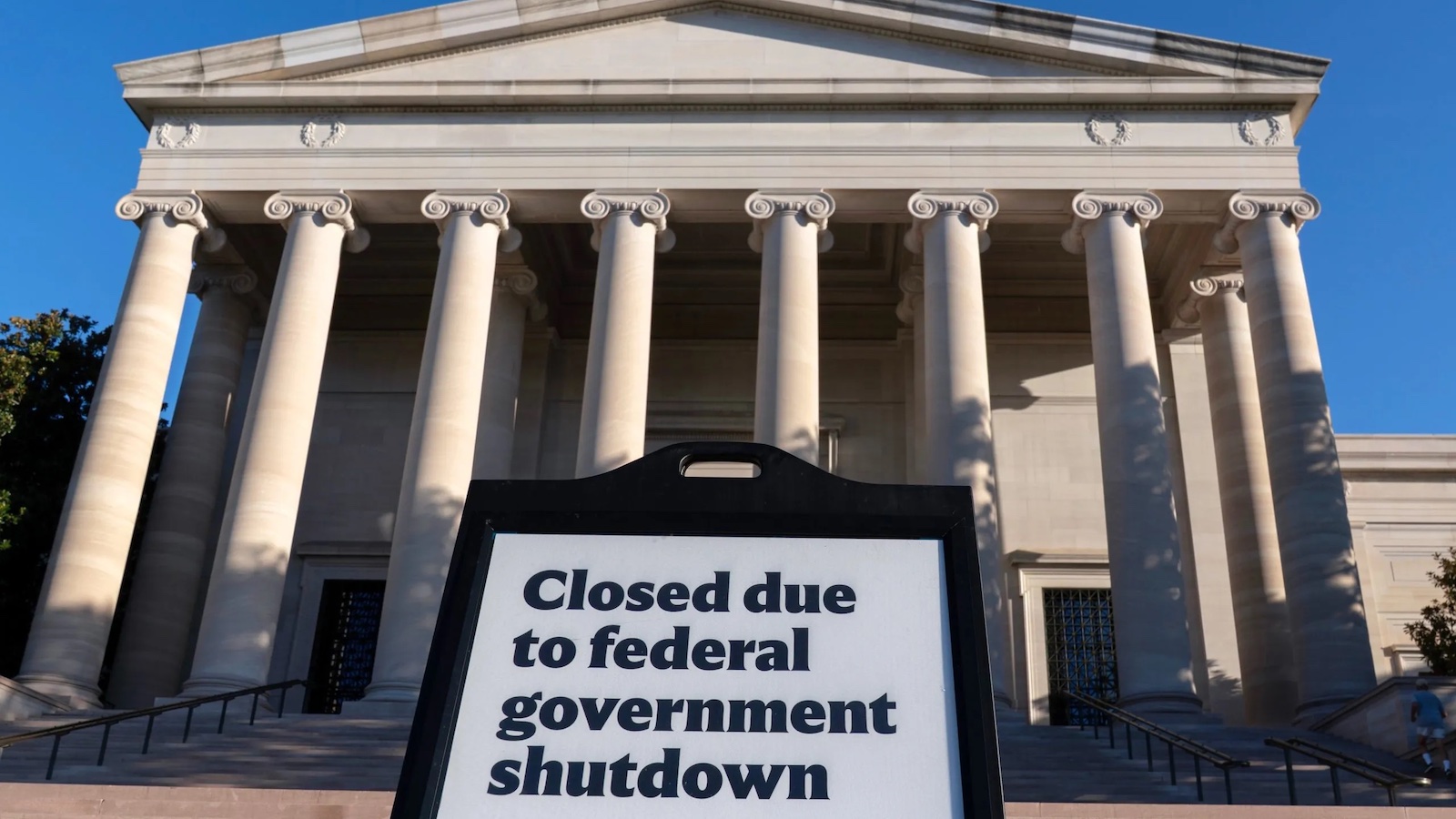
As we approach the midterm season, and a likely change in control of Congress, this increasingly powerful source of funds could provide the administration an unprecedented degree of independence in executing its less popular law enforcement activities with ICE and the National Guard. And, in the face of dwindling funds during the government shutdown, the Trump administration recently accepted a $130 million donation to the military in order to pay troop salaries—raising concerns of increased private influence over the influence that may accompany such a boon.
This threat isn’t new. The Founders understood that an Executive unbound by the purse strings of Congress could quickly become tyrannical.
In Federalist 58, James Madison wrote that the Legislature’s power of the purse “may, in fact, be regarded as the most complete and effectual weapon with which any constitution can arm the immediate representatives of the people.” Alexander Hamilton concurred, writing in Federalist 78 affirming that the legislature’s command over the government’s purse strings, representing the “will” of the people. That’s why they wrote the Appropriations Clause, which provides that “No money shall be drawn from the Treasury, but in Consequence of Appropriations made by Law.”
As Thomas G. Hunger and Michael D. Bopp explain in the newest addition of the Heritage Guide to the Constitution, this clause serves as the “cornerstone” of Congress’s power of the purse. Because of its placement in Section 9 of Article 1, which limits the federal government’s powers, the clause serves as a limitation on the ability of the federal government to spend funds, rather than an authorization of that power.
Yet, courts have failed to safeguard this fundamental principle of the separation of powers. In the 2024 Supreme Court case, Consumer Financial Protection Bureau v. Community Financial Services Association Of America, Ltd., Justice Thomas’s majority opinion allowed the CFPB to fund itself by directly withdrawing the amount of funds “reasonably necessary to carry out” the year’s duties (subject to an inflation-adjusted cap), rather than having to request appropriations through Congress. In the majority’s view, so long as Congress identifies some source for the executive to draw its funds from, the appropriations clause is satisfied, and no threat is posed to the power of the purse.
But, as Justice Alito (joined by Justice Gorsuch) highlighted in his dissent, this lackadaisical approach to the original principles embodied by the appropriation clause gives the CFPB an unprecedented level of unaccountability to the democratic process—completely freeing it from Congress. But, even more worryingly Justice Alito argued, “under this interpretation, the Appropriations Clause would permit an agency to be funded entirely by private sources.” Such a reality would end democratic influence over the Executive.
In Michigan, that reality has already arrived. Take the story of the late Manuel “Matty” Moroun. Moroun’s family once lived in Windsor, Ontario, but sometime around 1929, their house was seized and demolished to make way for the privately-owned Ambassador Bridge, which links Windsor, Ontario, with Detroit, Michigan. But Moroun did something remarkable: he grew up to buy the Bridge, and with it, regained his family land. As of 2019, the Ambassador Bridge provided for twenty seven percent (or $193.9 billion) of trade between Canada and the United States. But, since the early 2010s, the Michigan Department of Transportation had wanted to build a publicly owned alternative to Moroun’s bridge. In order to do so, the Michigan DOT needed to use the power of eminent domain to seize land owned by Moroun, which he held as part of the infrastructure surrounding his own bridge. Unlike his family nearly a century prior, Moroun now had the resources to fight back. After a lengthy campaign, Moroun successfully persuaded the state legislature to pass an appropriations bill prohibiting the Michigan DOT from expending “any state transportation revenue for construction planning or construction of the [the new bridge].”
But that didn’t stop the Michigan DOT from taking Moroun’s property. Instead of obeying the state legislature, the DOT unilaterally entered into a reimbursement agreement with the Canadian government. This agreement granted the Canadians a perpetual and exclusive tolling right for the bridge, so long as the Canadians agreed to reimburse the Michigan DOT for any funds they expended on eminent domain proceedings. Moroun sued under the state equivalent of the appropriations clause. But in DOT v. Riverview-Trenton R.R. Co., the State Court of Appeals held that executive agencies may directly disobey legislative command, and spend state money to do so, because funds that are eventually reimbursed do not count as “expended”. As Justice David Viviano explained in his dissent from the Michigan Supreme Court’s denial of certiorari, this was yet “another missed opportunity to address a contention that executive agencies and officials have acted outside the bounds of their prescribed authority.”
In the federal context, the dangers of deviating so far from a robust appropriations clause are even more pronounced. Take the Iran-Contra crisis, for example. In 1984 Congress, disturbed by CIA involvement in the activities of a rebel group (The Sandinistas) in Nicaragua, passed a rider prohibiting all forms of assistance to the Sandinistas. Not to be deterred, the CIA, DOD, and White House hustled to solicit private third party funds that could be transferred to the Sandinistas, including through an attempt to redirect funds from illegal weapons sales to Iranian insurgency groups. But under the contemporary understanding of the Appropriations Clause, the Executive may have been able to use its personnel and resources to directly aid the Sandinistas, so long as they received the funds from asset forfeitures, or willing third parties (including foreign governments). And, under a Riverview-Trenton logic, they could do so in reliance on future reimbursements.
With cryptocurrency seizures providing the executive its own rapidly appreciating and investible fisc, we face a potentially runaway problem: the administration can do what it wants, without having to ask Congress. We cannot proceed down this path.
We need civil asset forfeiture reform now. Funds should be directed back to the general fisc, where Congress can exercise exclusive control over their distribution. Further, Congress should act to expressly limit third-party funding of executive activities. Elsewise, it will lose its ability to limit the executive at all. Without the power of the purse held by Congress, “No Kings” may soon have to become “No Dragons,” as the Executive sits atop its pile of digital gold, raining fire where it may choose.
Free the People publishes opinion-based articles from contributing writers. The opinions and ideas expressed do not always reflect the opinions and ideas that Free the People endorses. We believe in free speech, and in providing a platform for open dialogue. Feel free to leave a comment.