
The Socialist Roots of Japanese Fascism
Japanese fascism is frequently interpreted as an anti-modern traditional response to liberal Western thought. Historical facts show that Japanese ultra-nationalism and fascism, both in their theory and practice, were based on European socialism, Marxism, and anarcho-syndicalism. Instead of standing on opposite ideological ends, the radicals of the Left and the state-ultranationalism came together in the Taishō (1912-1926) and early Shōwa periods due to a common perception of danger.
Facing capitalist industrialization and foreign vulnerability, Japanese thinkers and former communists used Marxist economic planning and the tactics of the Bolsheviks for an adaptation to the imperial traditions of the country. Thus, by substituting the conflict between classes for the unity of ethnicity and nationality around the emperor, the theorists managed to combine social revolution and military policy. Historical research clearly shows that Japanese national socialism was built from the Left, not from the traditional Right.
Capitalist Crisis and Disillusionment with Taishō Democracy
Japanese national socialism emerged against the backdrop of crises within the capitalist economy. After the Meiji Restoration, quick industrialization under state guidance resulted in a “dual economy” characterized by social stratification. By the 1920s, increasing dissatisfaction with Taishō parliamentary democracy had made it necessary for radical thinkers to find state-centered solutions.
The process of capitalist industrialization was disruptive to traditional society, while the weak international standing of Japan created fears of being surrounded by the West. Believing that the liberal system of parliamentarianism and laissez-faire capitalism widened the gap between classes and threatened the security of the nation, Japanese radicals found it imperative to change their course.
Takabatake Motoyuki and Marxian State Socialism
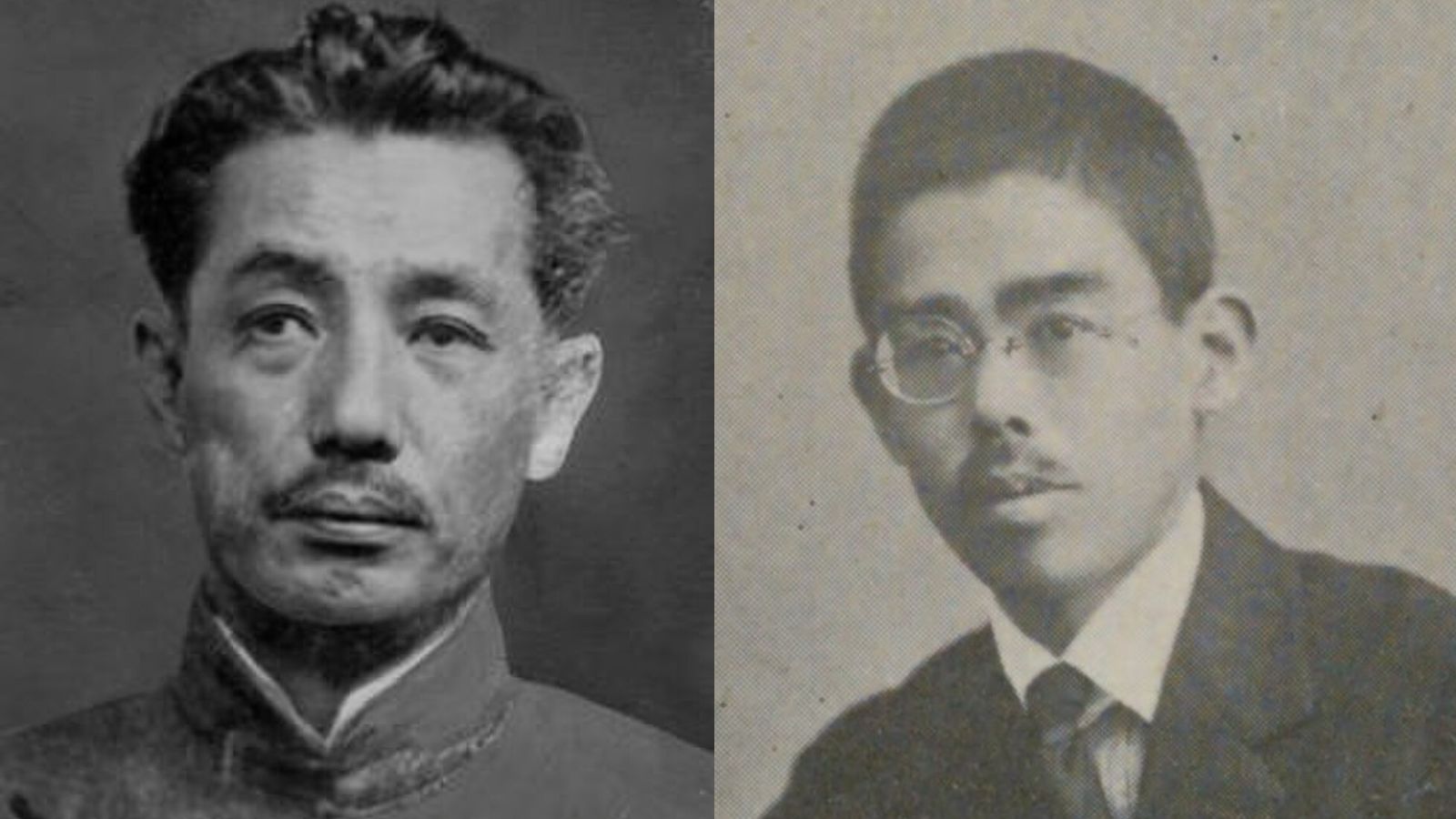
The intellectual connection between Marxism and Japanese fascism has been theorized first by Takabatake Motoyuki (1886-1928). Having been involved in the Meiji socialist movement, Takabatake acquired Marxist theories in the “winter period” after the High Treason Case of 1910-1911. In 1919, he completed his translation of Karl Marx’s Capital in Japanese. Yet in the same year, he, influenced by the Bolshevik Revolution, renounced the leadership of Yamakawa Hitoshi and Sakai Toshihiko, his fellow socialists, and created his theory of Marxian state socialism.
Takabatake agreed with Marxist economics, though he completely modified Marx’s theory of the state. He stated that Marx was a great economist-scientist but a utopian who made a false prediction about the state withering away. According to the idea of human nature of Thomas Hobbes, Takabatake believed that people were egocentric and, therefore, public tōsei, that is, central domination, power, and control, was inevitable for all human civilizations. The political domination predated the economic exploitation, so the state was needed as an institution of social cohesion.
Takabatake called for “functional statism,” calling for Marxist planning via state control of the industrial and financial sectors in a military state. Importantly, he replaced class conflict with ethnic national identity (minzokuteki), asserting that sentiment was more genuinely communal than class-based ideology. By linking the imperial monarchy with state power in a natural manner, Takabatake developed a national socialism that would influence extreme-right organizations like the Taikakai and the Social Mass Party’s fascist wing.
Kita Ikki: “Pure Socialism” and the Anti-Imperialist Proletarian Nation
Kita Ikki (1883-1937) was also one of the key architects of radical nationalism whose ideological development reflected the synthesis of socialism and imperial renovation. Kita started from the ranks of the early socialist movement with the publication of Kokutairon Oyobi Junsei Shakaishugi (The Question of the Kokutai and Pure Socialism) in 1906 to integrate Marxist criticism into the Japanese national state polity (kokutai).
Feeling disillusioned with liberal Taishō democracy, Kita wrote An Outline Plan for the Reorganization of Japan (Kokka Kaizōan Genri Taikō) in 1919. Domestically, Kita called for government control of private capital, social reforms, and restrictions of zaibatsu to ease class exploitation. In terms of foreign relations, Kita developed the idea of “have-not” nation theory, where the world is divided into capitalist “have nations” and “have-not” or proletarian nations like Japan.
As domestic workers had a right to strike against their capitalists, the international proletarian nation could use its moral right to wage war and expansion in Asia to overthrow the domination of Western imperialism. Kita became one of the founders of radical renovationist organizations such as Yūzonsha, and his Outline Plan influenced the Imperial Way faction officers, who initiated the February 26 Incident coup in 1936.
The Keirin Gakumei and Proto-Fascist Synthesis
The actual meeting of Marxism and imperialism occurred in January 1923 when Takabatake Motoyuki and Uesugi Shinkichi founded the Keirin Gakumei (Association for Statecraft Studies). Uesugi, an ultra-conservative professor of law at Tokyo Imperial University, who opposed the idea of a constitutional monarchy and supported Minobe Tatsukichi’s organ theory of the constitution, allied himself with a clear Marxist ideologue. This event shocked the contemporaries as the first known union between a Marxist theorist and an ultra-conservative scientist.
In its manifesto, the Keirin Gakumei developed the program which foresaw fascist ideology including ideological mobilization of all (“beating together like one heart”), the militarization of the country through general military conscription, control over the economy and labour force and anti-capitalist fight with the monopolies. All these elements were combined with loyalty to the emperor and promotion of the Japanese ethnicity. Contemporary critics of the organization in Kaizō journal and the Ministry of Justice reports equated the Keirin Gakumei with the Italian Fascism calling Takabatake “Japanese Mussolini.” The organization anticipated the Total War System of the 1940s combining socialist anti-capitalism and centralized state power.
Kanokogi Kazunobu: Totalitarianism and Platonic Statism
Another connection was drawn between radical anti-capitalism and imperial statism by Kanokogi Kazunobu (1884-1949). A former naval officer who took part in the Russo-Japanese war, Kanokogi switched his beliefs from Christian pacifism to Nietzschean statism and social Darwinism when studying philosophy overseas. As early as August 1917, two years prior to the establishment of Mussolini’s Fasci di Combattimento, Kanokogi invented and defined the term “totalitarianism” in his public lectures as the basis for his vision of the total reorganization of the Japanese state.
Kanokogi’s philosophy consisted of three parts: zentaishugi (complete elimination of individualism, liberalism and capitalism and their replacement by autarchy of the state and militarization), Pan-Asianism (Sumera Ajia, Japan’s divine mission to conduct a racial world revolution for liberation of Asia from Anglo-American imperialism) and fundamentalist devotion to national essence. Seeing Japan as an incarnation of Plato’s Republic, Kanokogi maintained that disinterested “philosopher-kings” would have to rule under spiritual guidance of the emperor. Moreover, Kanokogi considered the Bolsheviks’ uncompromising attitude towards full state control laudable and viewed the Bolsheviks as a natural ally against Anglo-American domination until later switching to German National Socialism. Kanokogi conducted the radicalization of military officers and nationalist societies in interwar period through organizations such as Rōsōkai and Yūzonsha.
The Tenkō Movement and the Conversion of the Left
The merging of socialist doctrine and fascist statism reached its height in the 1930s through the phenomenon of tenkō (conversion). Sano Manabu and Nabeyama Sadachika, leaders of the underground Japanese Communist Party (JCP), issued an announcement on June 8, 1933, renouncing the Comintern, rejecting orthodox Marxism-Leninism, and declaring their allegiance to the imperial nation at the Tokyo District Court. Within one month, 548 imprisoned communists deserted, and by 1935, organized communism in Japan was destroyed.
Tenkō marked a genuine ideological solution to the problem of “the national question” (minzoku mondai). The directives of the Comintern obliged Japanese Marxists to advocate stateless internationalism and reject the Emperor system, which was intrinsically connected with Japanese culture. Sano and Nabeyama solved this problem by combining Marxist ideology with the imperial nationalism of “one-country socialism”. They claimed that the monarchy could coexist with socialism as the embodiment of ethnic solidarity, made class struggle secondary to national solidarity, and interpreted Japanese expansion in Manchuria and China as the fulfillment of an anti-imperialist mission of Asian liberation from Western domination. Former socialist parties and trade unions voluntarily merged with the totalitarian Imperial Rule Assistance Association (Taisei Yokusankai) by 1940-1942.
The Left-Wing Lineage of Japanese Fascism
However, history has shown that Japanese fascism was not a senseless regression into the past and an irrational break with the process of modernization but rather a very sophisticated form of modernization ideology, which had its roots in socialism and Marxism. Japanese radicals combined Marxist analysis of economy, syndicalist activism, and totalitarian techniques of the Bolsheviks with the mythological theory of kokutai. This development had its parallels in Europe where there were similar ideas developed by Georges Sorel of French national syndicalism, classical fascism of Benito Mussolini of Italy (himself being a former radical Marxist), early Nazism of Strasserism, Spanish pre-Falangist national syndicalism of JONS, and German National Bolshevism.
Free the People publishes opinion-based articles from contributing writers. The opinions and ideas expressed do not always reflect the opinions and ideas that Free the People endorses. We believe in free speech, and in providing a platform for open dialogue. Feel free to leave a comment.