Covert Ops Déjà Vu
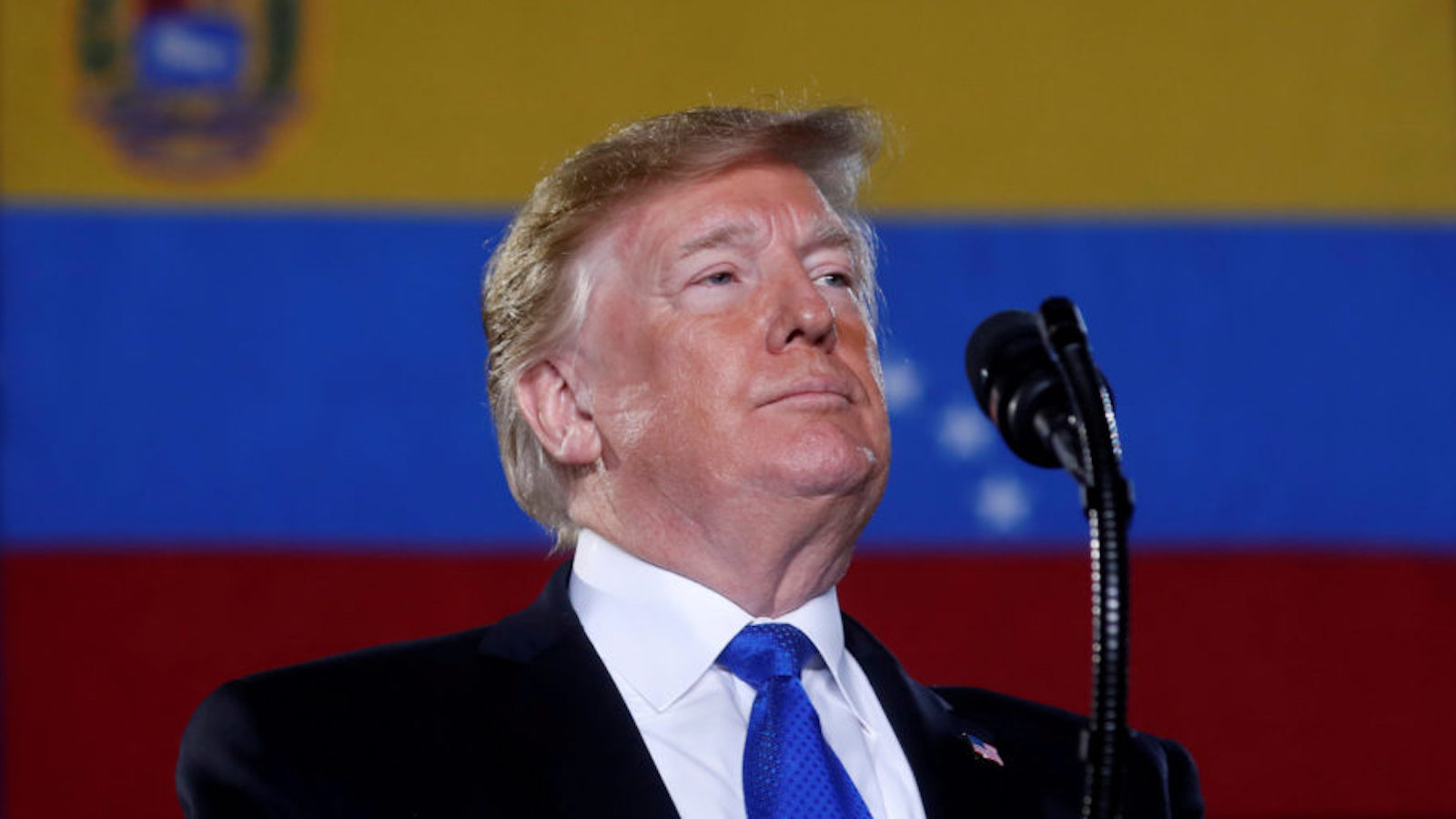
President Trump’s admission that the CIA is covertly operating within Venezuela has confirmed many suspicions. Trump was cited as stating that he wants to combat drug trafficking and halt an ‘influx of prisoners, including from mental institutions,’ as the justification for the operations. This admission comes as the Trump administration has ramped up its efforts in recent months in combating narcotics, including the recent strike that killed six off the coast of Venezuela. He has hinted that maybe land operations would be needed to fully ensure that the U.S. combats narcotics effectively, showing signs that the U.S. may be invading Venezuela in due time.
While the Trump administration and supporters of these actions would say that the move is necessary to protect U.S. national security and its citizens, it must be understood that time and again, U.S. interventionism within Central and South America has been terrible in execution and results. Over the decades, these operations, covert or not, have been framed as defensive measures to protect the U.S. from shadowy threats. The threats loomed for Americans from communism, terrorism, and drug trafficking, among others.
The aftermath of these interventions, however, has too frequently been violence, instability in the United States and the country in question, and the undermining of democracy, here and abroad.
One only needs to look at the U.S.-backed coups and the regimes it supported during the Cold War to see how these efforts panned out. The CIA backed regimes and groups that committed vast human rights violations, all while under the guise that we were fighting to protect U.S. interests or against the never-ending threat of communism. In Guatemala in 1954, the CIA-backed Operation PBSuccess overthrew the democratically elected government of Jacobo Arbenz, in which his land reforms under the United Fruit Company were seen as a threat to U.S. corporate interests. This intervention would eventually lead to multiple military dictators and a 36-year-long civil war within the country.
In Chile, the CIA covertly worked to prevent Salvador Allende and would work to destabilize his government to the tune of $8 million in covert actions between 1970-1973. The efforts to destabilize the country through covert actions culminated in the military coup that brought General Augusto Pinochet to power, another brutal dictatorship that would kill thousands, and many more would ‘disappear’ off the face of the earth.
The U.S. involvement in Central America got its most violent chapter in the 1980s with the deep covert operations within El Salvador and Nicaragua. The Reagan administration put billions of dollars into supporting Salvadoran governmental forces, one of the most horrific unintended events being the El Mozote Massacre, where over 800 civilians, including women and children, were slaughtered by the Atlacatl Battalion, equipped and explicitly trained by the U.S. military. A massacre that the U.S. continues to downplay its involvement in and has resisted calls for accountability in. The latter violent chapter would be in Nicaragua, where the U.S. backed the Contra forces, again, to prevent ‘spreading communism’.
The Salvadoran civil war of the 1980s not only devastated Central America but also triggered a massive wave of refugees and violence. Tens of thousands of Salvadorans sought asylum in the United States, many settling in Los Angeles and other urban centers. Among those refugees would be the young Salvadorans who started the notorious MS-13 gang, one of the most violent transnational criminal organizations. MS-13 coming to fruition is an unintended consequence of the United States’ continuous involvement in Central and South America through its interventionist policies. The mass gang violence that MS-13 brought with it is the same violence that the Trump administration is seemingly trying to defeat by using the same ill-advised policies as before.
The striking similarity between the current events unfolding in the Trump administration’s announcement and historical precedent is uncanny.
The Trump administration’s insistence that these operations are needed to protect U.S. interests is leading to more instability and human suffering. The framing of Maduro’s Venezuela as the ‘socialist drug king’ of South America bears a resemblance to the interventions throughout America’s history with Central and South America. What is worse is that the ‘global war on drugs’ bears a striking resemblance to the ‘global war on terror,’ after 9/11, in which both can ultimately find an unlimited number of enemies for the United States to intervene and fight. There is no endgame to both the ‘global war on terror’ and the ‘global war on drugs’ because the U.S. always wants to have that enemy, for there always to be the ‘other’ we must fight against. Maduro’s Venezuela is the next ‘other’ in a long line that must be defeated in the name of ‘security.’
Even more so, the Trump administration’s admission of covert operations comes with little transparency of the scope and oversight of these operations, much the same as how mission creep affected the scope of the wars in Afghanistan and Iraq. This mission creep and covert operations raise concerns about accountability and legal justification under both U.S. and international law. The U.S. is bound to respect Venezuela’s sovereignty and refrain from the use of unauthorized force. The risk of escalation, regional destabilization, and blowback is apparent. History shows that these covert operations rarely produce the outcomes that the U.S. wishes to see and instead often only deepen the conflict, increase the migrant flows to the U.S., and foster more anti-U.S. sentiment.
What is urgently needed is complete transparency and oversight of these operations. Congress should demand clarity on the legal basis for these operations. The end goal needs to be specifically defined, with sunset dates on AUMFs (Authorization of Use of Military Force), in the event of intervention, which seems likely. The American people deserve more than the rhetoric from the Trump administration, and need more assurances that the U.S. will not intervene militarily in Venezuela. If a larger regional conflict were to erupt in Venezuela, it would not only affect Venezuela, but also, as history suggests, the U.S. and the rest of the Western Hemisphere would have to deal with the consequences that follow. A mass refugee crisis could unfold, with hundreds of thousands fleeing, possibly illegally, to the U.S. Rather than stabilizing the region, covert operations and military interventions risk a larger humanitarian crisis and fuel migration and violence. It is a costly outcome that D.C. should avoid before deciding to pull the trigger on the next operation.
Trump’s admission of covert operations happening is not just the headline for the day, but a warning of what is to come. The United States has repeatedly intervened in Latin America with promises of promoting democracy and stability, only for that to backfire with horrific effects. The legacy of El Mozote, the numerous civil wars, and the unintended consequences of mass migration demonstrate that we must learn from history. If the Trump administration truly values U.S. security, it must reconsider moving forward with covert operations to prevent history from repeating itself.
Free the People publishes opinion-based articles from contributing writers. The opinions and ideas expressed do not always reflect the opinions and ideas that Free the People endorses. We believe in free speech, and in providing a platform for open dialogue. Feel free to leave a comment.